Crème Brûlée
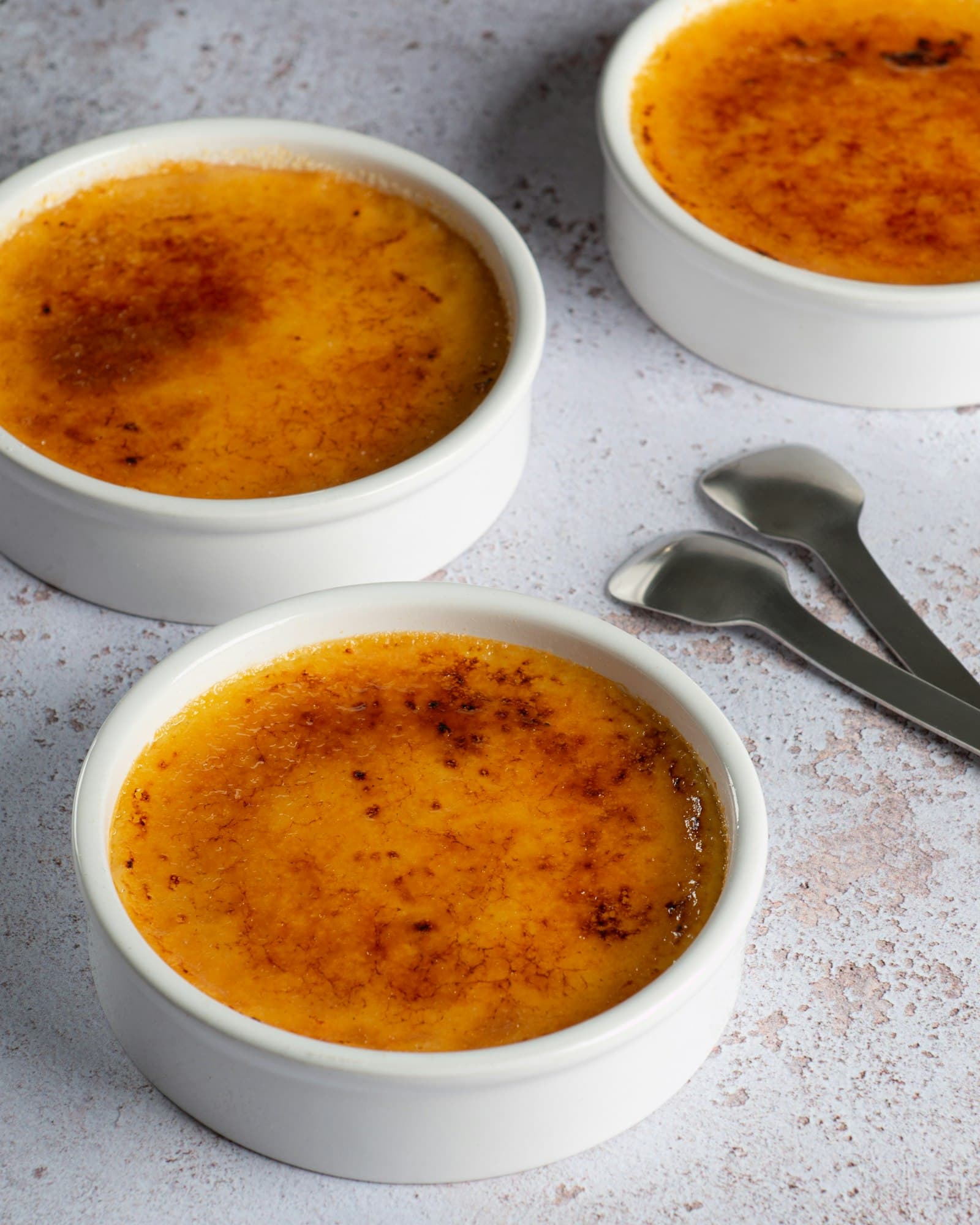
Crème brûlée is one of the easiest restaurant desserts to make at home. The custard needs only cream, egg yolks, sugar and vanilla, bakes gently in a water bath and then waits in the fridge until you need it, which makes it ideal for dinner parties. The crackly burnt-sugar top goes on just before serving.
Published
- Prep Time
- 20 mins
- Cook Time
- 45 mins
- Chill
- 4 hrs
- Total Time
- 5 hrs 5 mins
- Servings
- 6 servings
How do you make Crème Brûlée?
To make crème brûlée, heat 600 ml cream with vanilla, then whisk it slowly into 6 egg yolks beaten with 75 g sugar. Strain into six ramekins and bake in a hot water bath at 150°C (300°F) for 30-40 minutes, until the centres just wobble. Chill for at least 4 hours, then sprinkle with sugar and torch until amber and crisp.
- Total time
- 5 hrs 5 mins
- Calories
- 480 per serving
- Protein
- 5 g
- Yield
- 6 servings
- Difficulty
- Medium
- Method
- Baking
Ingredients
Custard
Topping
Equipment
6 ramekins (about 150 ml each) · Deep roasting pan · Kettle · Medium saucepan · Mixing bowl and whisk · Fine-mesh sieve and a jug · Kitchen torch, or the oven broiler
Quick Directions
Heat the cream
Heat the oven to 150°C (300°F) and warm the cream with vanilla until steaming.
Whisk the yolks and sugar
Whisk the yolks, sugar and salt until smooth.
Combine and strain
Slowly whisk the cream into the yolks, then strain into a jug.
Bake in a water bath
Bake in a hot water bath for 30-40 minutes, until the centres just wobble.
Cool and chill
Cool, then chill for at least 4 hours.
Caramelize the tops
Sprinkle with sugar and torch until deep amber, then let it harden.
Step-by-Step Instructions
Follow these detailed steps to make the perfect crème brûlée.
Heat the cream
Heat the oven to 150°C (300°F) and boil a full kettle of water. Set the ramekins in a deep roasting pan. Pour the cream into a saucepan, scrape in the seeds from the vanilla bean and add the pod too. Heat over medium heat for about 5 minutes, until steaming with small bubbles around the edge, but don't let it boil. Take it off the heat and let it steep for 10 minutes, then remove the pod. If you are using vanilla extract, skip the steeping and add it in step 3.
Whisk the yolks and sugar
In a mixing bowl, whisk the egg yolks, granulated sugar and salt for about 1 minute until pale and smooth. Whisk gently: you want the sugar dissolved, not a bowl of foam.
Combine and strain
Pour the warm cream into the yolks in a slow, thin stream, whisking constantly so the eggs don't scramble. Stir in the vanilla extract now if using. Strain the custard through a fine-mesh sieve into a jug and skim off any foam from the surface.
Bake in a water bath
Divide the custard between the ramekins. Put the roasting pan on the oven rack, then carefully pour hot water from the kettle into the pan until it comes halfway up the sides of the ramekins. Bake for 30-40 minutes, until the edges are set and the centres wobble like set jelly when you nudge the pan. An instant-read thermometer in the centre should read 77-80°C (170-175°F).
Cool and chill
Lift the ramekins out of the water and cool them on a rack for 30 minutes. Cover and refrigerate for at least 4 hours, or up to 3 days, until fully set and cold.
Caramelize the tops
Blot any moisture from the surface of the custards with a paper towel. Sprinkle about 2 tsp of the topping sugar over each one, tilting to coat the surface evenly and tipping out any excess. Hold the torch flame about 5 cm above the sugar and keep it moving until the sugar melts, bubbles and turns deep amber. Let the tops harden for 2-3 minutes, then serve.
Recipe Tips
- Take the custards out while the centres still wobble. They firm up as they chill, and overbaking gives a grainy, rubbery texture.
- The water bath keeps the heat gentle so the custard sets smoothly instead of curdling. Always use hot water from the kettle, not cold.
- Shallow, wide ramekins give more crackly top in every spoonful. Deeper ramekins can need 5-10 minutes longer in the oven.
- Superfine sugar melts fastest and most evenly under the torch. Coarse raw sugar gives a thicker, crunchier crust.
- Torch the sugar just before serving. After an hour or so in the fridge, the caramel starts to soften and weep.
Variations
- Coffee: stir 2 tsp instant espresso powder into the hot cream until dissolved.
- Chocolate: whisk 85 g finely chopped dark chocolate into the hot cream until smooth before adding it to the yolks.
- Orange: steep the finely grated zest of 1 orange in the cream along with the vanilla, and strain it out with the custard.
- Earl Grey: steep 2 Earl Grey tea bags in the hot cream for 10 minutes, then squeeze and remove them.
Nutrition (per serving)
| Calories | 480 |
|---|---|
| Protein | 5 g |
| Carbs | 24 g |
| Fat | 41 g |
| Saturated fat | 25 g |
| Fibre | 0 g |
| Sugar | 24 g |
| Sodium | 95 mg |
Estimated from the listed ingredients; values vary by brand.
Related Recipes

Storing & Reheating
- Fridge
- Cover the baked custards before torching and refrigerate for up to 3 days. Once the tops are caramelized, serve within an hour or two, since the crust softens in the fridge.
Crème Brûlée FAQs
Can I make crème brûlée without a torch?
Yes. Put the sugared custards on a baking sheet on the top rack, about 10 cm under a hot broiler, and broil for 1-3 minutes, watching constantly, until the sugar is amber. The broiler warms the custard a little, so chill it for 15 minutes before serving.
Why didn't my crème brûlée set?
It was most likely underbaked, or the ramekins were deeper than usual and needed more time. Bake until only the centre wobbles, or until the custard reads 77-80°C (170-175°F), and chill for the full 4 hours, because it keeps firming as it cools.
Why is my crème brûlée grainy or eggy?
The custard got too hot. That happens when the oven runs hot, the water bath is skipped, or the hot cream goes into the yolks too quickly. Bake at 150°C (300°F) in a water bath, pour the cream in slowly while whisking, and take the custards out while the centres still wobble.
How far ahead can I make crème brûlée?
Bake the custards up to 3 days ahead and keep them covered in the fridge. Add and torch the sugar topping just before serving so the crust stays crisp.
What can I do with the leftover egg whites?
Egg whites keep in a covered container in the fridge for up to 3 days or in the freezer for up to 3 months. Use them for meringues, macarons, angel food cake or an egg white omelette.
Disclaimer
- Nutrition information is an estimate based on the listed ingredients. It changes with the brands, portion sizes and swaps you use.
- Read ingredient labels for allergens and for diet claims such as gluten-free or vegan. Products and their ingredients can change.
- Cooking times are a guide, since ovens, air fryers and slow cookers all run differently. Use a food thermometer and cook meat, poultry and fish to the safe internal temperatures in government food safety guidance.
- This recipe is general information, not medical or nutrition advice. If you have an allergy, a health condition or a special diet, check with a qualified health professional.