Carrot Cake with Cream Cheese Frosting
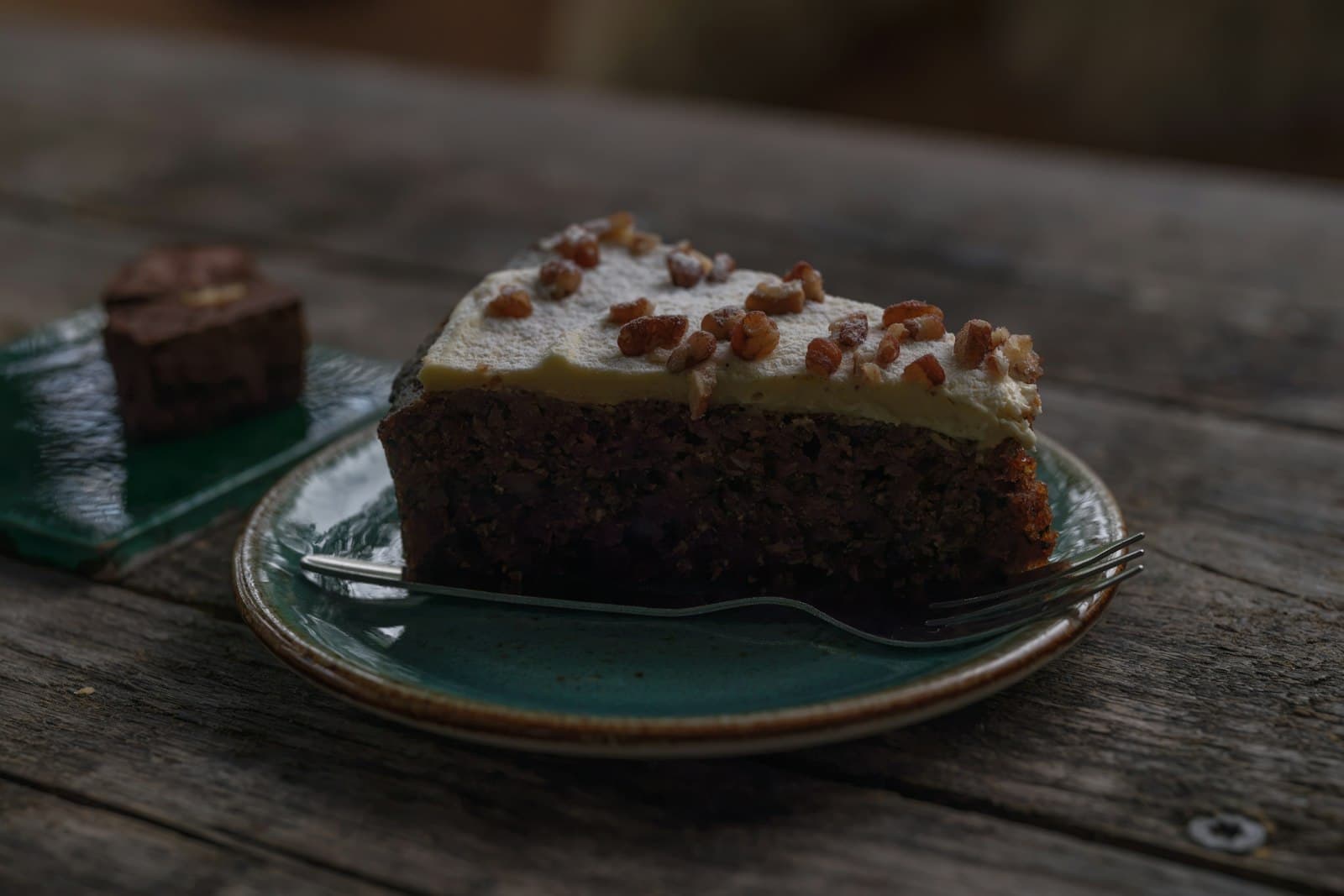
A good carrot cake is moist and gently spiced, with plenty of cream cheese frosting. Oil instead of butter keeps this one soft for days, finely grated carrot disappears into the crumb, and toasted walnuts add crunch. It is a popular choice for Easter and spring gatherings, and it slices more neatly after a night in the fridge.
Published
- Prep Time
- 30 mins
- Cook Time
- 35 mins
- Cool and chill
- 1 hr 30 mins
- Total Time
- 2 hrs 35 mins
- Servings
- 12 slices
How do you make Carrot Cake with Cream Cheese Frosting?
To make carrot cake, whisk flour, baking soda, baking powder, cinnamon, ginger, nutmeg and salt. Beat 4 eggs with brown and white sugar and oil, then stir in the dry ingredients, 300 g of finely grated carrot and chopped walnuts. Bake in two 20 cm (8 inch) pans at 180°C (350°F) for 30-35 minutes, cool completely, then fill and top with cream cheese frosting.
- Total time
- 2 hrs 35 mins
- Calories
- 640 per serving
- Protein
- 7 g
- Yield
- 12 slices
- Difficulty
- Easy
- Method
- Baking
Ingredients
Cake
Frosting
Equipment
Two 20 cm (8 inch) round cake pans · Parchment paper · Box grater or food processor · Stand or hand mixer · Offset spatula
Quick Directions
Prepare the pans and nuts
Heat the oven to 180°C (350°F).
Mix the dry ingredients
Whisk the flour, baking soda, baking powder, cinnamon, ginger, nutmeg and salt together in a bowl.
Make the batter
In a large bowl, whisk the eggs, brown sugar and granulated sugar for about 1 minute, until smooth.
Bake
Divide the batter between the pans and bake for 30-35 minutes, until the tops spring back when pressed and a skewer pushed into the centre comes out clean.
Make the frosting
Beat the cream cheese and butter for about 2 minutes, until smooth.
Assemble
Set one cake layer on a plate and spread it with a third of the frosting.
Step-by-Step Instructions
Follow these detailed steps to make the perfect carrot cake with cream cheese frosting.
Prepare the pans and nuts
Heat the oven to 180°C (350°F). Grease two 20 cm (8 inch) round cake pans and line the bases with parchment. Toast the nuts on a baking sheet for 6-8 minutes, until fragrant, then cool and chop them.
Mix the dry ingredients
Whisk the flour, baking soda, baking powder, cinnamon, ginger, nutmeg and salt together in a bowl.
Make the batter
In a large bowl, whisk the eggs, brown sugar and granulated sugar for about 1 minute, until smooth. Whisk in the oil and vanilla. Add the flour mixture and stir just until no dry flour remains, then fold in the carrots and three-quarters of the nuts.
Bake
Divide the batter between the pans and bake for 30-35 minutes, until the tops spring back when pressed and a skewer pushed into the centre comes out clean. Cool in the pans for 10 minutes, then turn the cakes out onto a rack and leave them to cool completely, about 1 hour.
Make the frosting
Beat the cream cheese and butter for about 2 minutes, until smooth. Add the icing sugar, vanilla and salt and beat on low, then medium speed, for 1-2 minutes, until light and creamy. Stop there; overbeating can make cream cheese frosting runny.
Assemble
Set one cake layer on a plate and spread it with a third of the frosting. Top with the second layer and spread the rest of the frosting over the top and sides. Scatter the remaining nuts over the top and chill for 30 minutes to set the frosting before slicing.
Recipe Tips
- Grate the carrots on the fine side of a box grater or in a food processor. Fine shreds blend into the crumb and keep the cake moist; coarse shreds stay chunky.
- Use block cream cheese rather than the spreadable kind sold in tubs, which is softer and can make the frosting runny.
- Let the layers cool completely before frosting, or the frosting will melt and slide off.
Variations
- Add 75 g (1/2 cup) raisins, or 225 g (1 cup) well-drained crushed pineapple, along with the carrots.
- Bake as a sheet cake in a 23 x 33 cm (9 x 13 inch) pan for 35-40 minutes and frost only the top.
- Bake as 24 cupcakes at 180°C (350°F) for 18-22 minutes.
- Leave out the nuts for a nut-free cake.
Nutrition (per serving)
| Calories | 640 |
|---|---|
| Protein | 7 g |
| Carbs | 66 g |
| Fat | 40 g |
| Saturated fat | 11 g |
| Fibre | 2 g |
| Sugar | 47 g |
| Sodium | 360 mg |
Estimated from the listed ingredients; values vary by brand.
Related Recipes
Storing & Reheating
- Fridge
- Cover and refrigerate the frosted cake for up to 5 days. Let slices stand at room temperature for 20-30 minutes before serving.
- Freezer
- Freeze unfrosted layers, wrapped well, for up to 3 months, or freeze frosted slices on a tray, then wrap them and freeze for up to 1 month. Thaw in the fridge.
Carrot Cake with Cream Cheese Frosting FAQs
Does carrot cake need to be refrigerated?
Yes, once it has cream cheese frosting. Keep it covered in the fridge and don't leave it at room temperature for more than 2 hours. Unfrosted layers can stay wrapped at room temperature for up to 2 days.
Why is my carrot cake dense?
Too much flour or too much mixing after the flour goes in are the usual causes. Weigh the flour, or spoon it into the cup and level it, and stir only until no dry streaks remain.
Can I make carrot cake ahead?
Yes. Bake the layers up to 2 days ahead and keep them wrapped at room temperature, or freeze them for up to 3 months. The frosted cake keeps in the fridge for up to 5 days.
Why use oil instead of butter in carrot cake?
Oil stays liquid at room temperature and in the fridge, so an oil-based cake stays soft and moist even when chilled. A butter cake firms up in the fridge.
Disclaimer
- Nutrition information is an estimate based on the listed ingredients. It changes with the brands, portion sizes and swaps you use.
- Read ingredient labels for allergens and for diet claims such as gluten-free or vegan. Products and their ingredients can change.
- Cooking times are a guide, since ovens, air fryers and slow cookers all run differently. Use a food thermometer and cook meat, poultry and fish to the safe internal temperatures in government food safety guidance.
- This recipe is general information, not medical or nutrition advice. If you have an allergy, a health condition or a special diet, check with a qualified health professional.