Garlic and Rosemary Roast Leg of Lamb
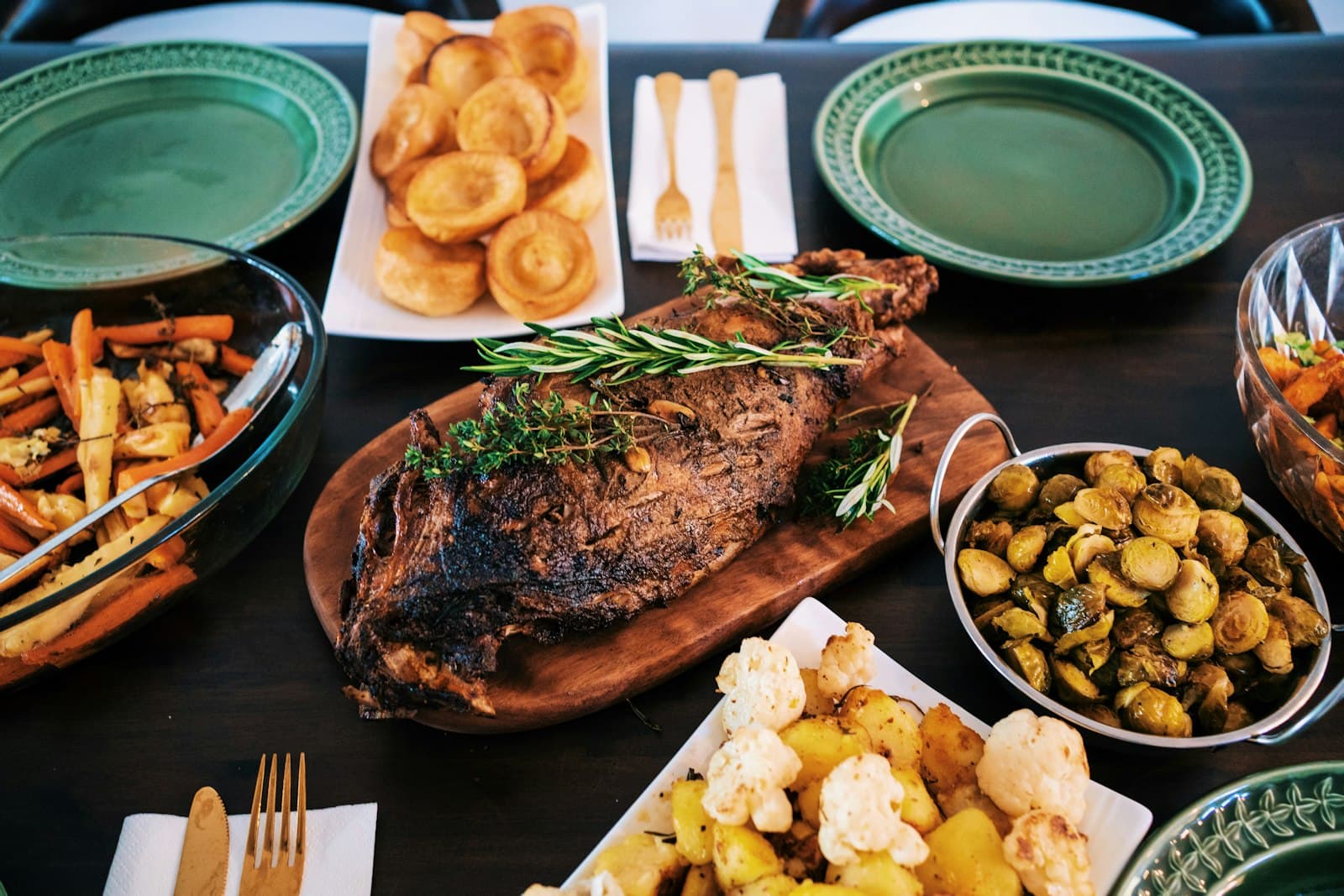
Roast lamb is a traditional Easter centrepiece in many countries, and a leg of lamb needs very little hands-on work. Slivers of garlic and tufts of rosemary go into small cuts all over the meat, a lemony herb rub goes on top, and a hot start in the oven browns the outside before the heat comes down to finish it gently.
Published
- Prep Time
- 20 mins
- Cook Time
- 1 hr 30 mins
- Rest
- 20 mins
- Total Time
- 2 hrs 10 mins
- Servings
- 8 servings
How do you make Garlic and Rosemary Roast Leg of Lamb?
To roast a leg of lamb, cut small slits all over a 2.5 kg (5.5 lb) bone-in leg and push in slivers of garlic and rosemary. Rub with olive oil, lemon zest, salt and pepper. Roast at 220°C (425°F) for 20 minutes, then at 180°C (350°F) for 60-80 minutes, until the thickest part reaches 63°C (145°F). Rest for 20 minutes before carving.
- Total time
- 2 hrs 10 mins
- Calories
- 400 per serving
- Protein
- 43 g
- Yield
- 8 servings
- Difficulty
- Easy
- Method
- Roasting
Ingredients
Equipment
Large roasting pan · Small sharp knife · Instant-read thermometer · Carving knife and board
Quick Directions
Get ready
Take the lamb out of the fridge 30-60 minutes before roasting and pat it dry.
Stud with garlic and rosemary
Use a small sharp knife to cut 12-16 slits, about 2 cm (3/4 inch) deep, all over the lamb.
Season
Mix the olive oil, minced garlic, chopped rosemary, lemon zest, salt and pepper and rub it all over the lamb.
Roast
Roast for 20 minutes, then lower the heat to 180°C (350°F) and pour the stock into the pan.
Rest
Move the lamb to a board, cover it loosely with foil and rest for 20 minutes.
Make the pan juices and carve
Pour the pan juices into a jug and spoon off the fat.
Step-by-Step Instructions
Follow these detailed steps to make the perfect garlic and rosemary roast leg of lamb.
Get ready
Take the lamb out of the fridge 30-60 minutes before roasting and pat it dry. Heat the oven to 220°C (425°F).
Stud with garlic and rosemary
Use a small sharp knife to cut 12-16 slits, about 2 cm (3/4 inch) deep, all over the lamb. Push a sliver of garlic and a small tuft of rosemary into each one.
Season
Mix the olive oil, minced garlic, chopped rosemary, lemon zest, salt and pepper and rub it all over the lamb. Scatter the onions and lemon halves in the roasting pan and set the lamb on top, fattier side up.
Roast
Roast for 20 minutes, then lower the heat to 180°C (350°F) and pour the stock into the pan. Roast for 60-80 minutes more, starting to check after 50 minutes, until an instant-read thermometer in the thickest part, away from the bone, reads 63°C (145°F). That is the government food safety guidance for whole cuts of lamb, and the centre will still be pink. For medium, roast to 71°C (160°F).
Rest
Move the lamb to a board, cover it loosely with foil and rest for 20 minutes. Food safety guidance calls for a rest of at least 3 minutes; a longer rest lets the juices settle so the meat stays juicy when carved.
Make the pan juices and carve
Pour the pan juices into a jug and spoon off the fat. Return the juices to the pan with a splash of water, scrape up the browned bits over medium heat and simmer for 2-3 minutes. Carve the lamb into thin slices across the grain, working around the bone, and serve with the pan juices.
Recipe Tips
- Go by temperature, not time. Legs of lamb vary in size and shape, and a thermometer is the only reliable test.
- For a boneless leg, use a 1.8-2 kg (4-4.5 lb) rolled and tied joint and start checking the temperature after 40 minutes at 180°C (350°F).
- Mint sauce or mint jelly, roast potatoes and green vegetables are the classic partners for roast lamb.
- If you avoid gluten, check the stock label for a gluten-free claim.
Variations
- Add 1 kg (2.2 lb) halved baby potatoes to the pan when you lower the heat, turning them in the juices halfway through.
- Greek-style: swap the rosemary for 1 tbsp dried oregano and add the lemon juice to the rub.
- Add 2 tbsp Dijon mustard to the rub for a tangier crust.
Nutrition (per serving)
| Calories | 400 |
|---|---|
| Protein | 43 g |
| Carbs | 2 g |
| Fat | 24 g |
| Saturated fat | 9.5 g |
| Fibre | 0.5 g |
| Sugar | 1 g |
| Sodium | 480 mg |
Estimated from the listed ingredients; values vary by brand.
Related Recipes

Storing & Reheating
- Fridge
- Refrigerate carved leftovers within 2 hours and use within 3-4 days.
- Freezer
- Freeze sliced lamb in airtight bags for up to 3 months.
- Reheat
- Reheat slices covered, with a splash of stock, at 160°C (325°F) until they reach 74°C (165°F), or serve them cold in sandwiches and salads.
Garlic and Rosemary Roast Leg of Lamb FAQs
What temperature should leg of lamb be cooked to?
Government food safety guidance for whole cuts of lamb is 63°C (145°F), measured in the thickest part away from the bone, followed by a rest of at least 3 minutes. The centre is still pink at that point. Some cooks prefer lamb pinker; for medium, roast it to 71°C (160°F).
How long does it take to roast a leg of lamb?
A 2.5 kg (5.5 lb) bone-in leg takes about 1 hour 20 minutes to 1 hour 40 minutes: 20 minutes at 220°C (425°F), then 60-80 minutes at 180°C (350°F). Check it with a thermometer, since sizes and ovens vary.
How long should leg of lamb rest?
Rest it for at least 3 minutes, the food safety minimum, but 15-20 minutes is better for a large roast. Cover it loosely with foil so it stays warm without steaming the crust.
How much leg of lamb do I need per person?
Allow about 300 g (11 oz) of bone-in leg per person, or about 200 g (7 oz) boneless. A 2.5 kg (5.5 lb) bone-in leg serves about 8.
Disclaimer
- Nutrition information is an estimate based on the listed ingredients. It changes with the brands, portion sizes and swaps you use.
- Read ingredient labels for allergens and for diet claims such as gluten-free or vegan. Products and their ingredients can change.
- Cooking times are a guide, since ovens, air fryers and slow cookers all run differently. Use a food thermometer and cook meat, poultry and fish to the safe internal temperatures in government food safety guidance.
- This recipe is general information, not medical or nutrition advice. If you have an allergy, a health condition or a special diet, check with a qualified health professional.