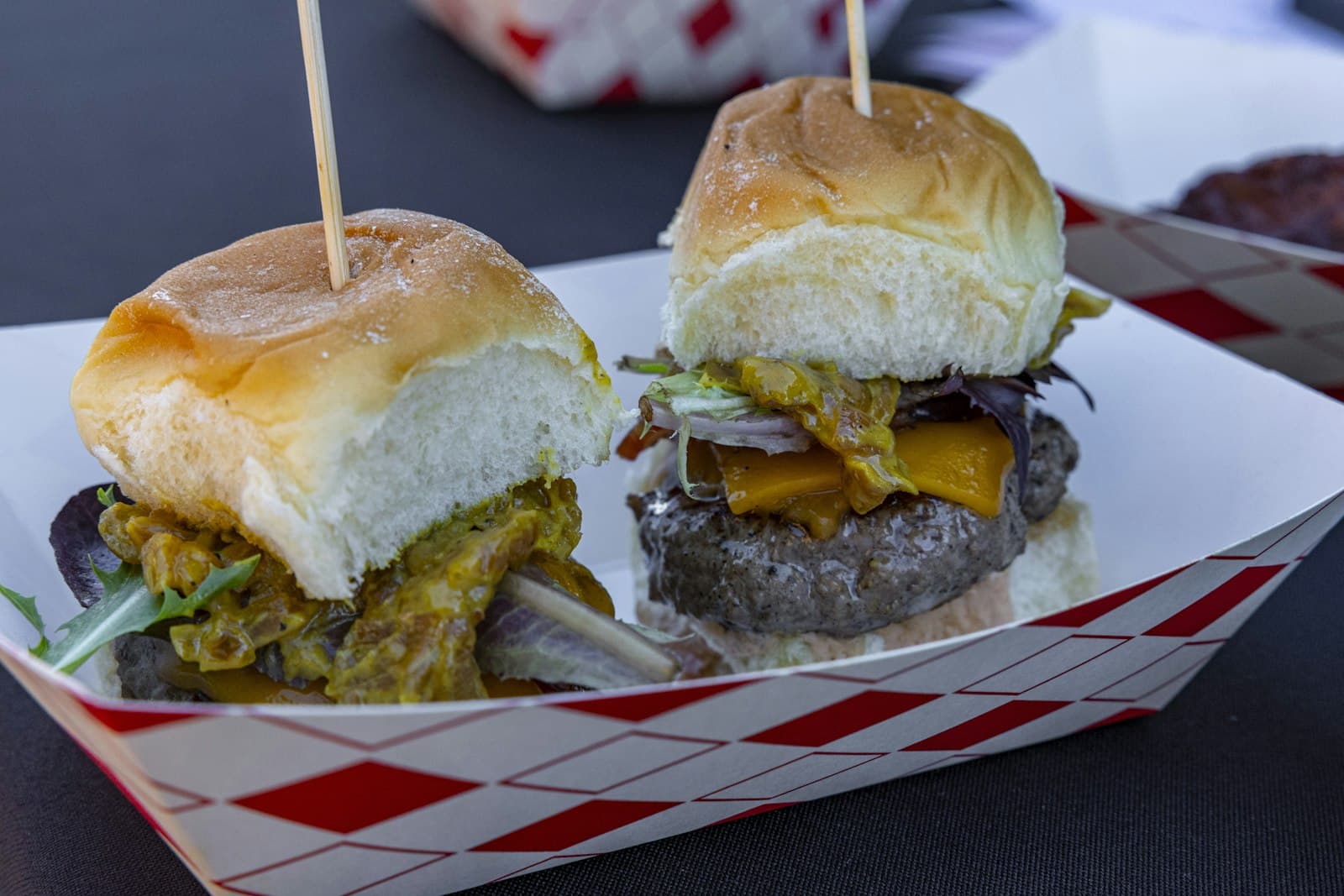
Classic Homemade Beef Burgers
Homemade beef burgers need very little: well-chosen ground beef, a light hand when shaping and salt on the outside just before cooking. Using 80/20 beef keeps the patties juicy, and a shallow dimple in the middle stops them puffing into meatballs as they cook. A thermometer takes the guesswork out of doneness.
By Ben Kowalski
Published
- Prep Time
- 15 mins
- Cook Time
- 12 mins
- Total Time
- 27 mins
- Servings
- 4 burgers
How do you make Classic Homemade Beef Burgers?
Gently shape 700 g of 80/20 ground beef into 4 patties about 2 cm thick, press a shallow dimple into each centre and season the outside with salt and pepper. Cook on a hot grill or cast-iron skillet over medium-high heat for 4-5 minutes per side, until the centre reaches 71°C (160°F). Add cheese for the last minute and serve on toasted buns.
- Total time
- 27 mins
- Calories
- 660 per serving
- Protein
- 40 g
- Yield
- 4 burgers
- Difficulty
- Easy
- Method
- Grilling
Ingredients
Burgers
Burger sauce
To serve
Equipment
Grill or large cast-iron skillet · Instant-read thermometer · Spatula · Small bowl
Quick Directions
Make the sauce
Stir the mayonnaise, ketchup, mustard and chopped pickles together in a small bowl.
Shape the patties
Divide the cold beef into 4 equal portions, about 175 g each.
Heat and season
Heat a grill or cast-iron skillet over medium-high heat and brush it lightly with oil.
Cook the burgers
Cook the patties for 4-5 minutes without moving them, until a deep brown crust forms and they release easily.
Melt the cheese
For cheeseburgers, lay a slice of cheddar on each patty for the last minute and cover with the grill lid or a pan lid until it melts.
Toast and build
Toast the cut sides of the buns on the grill or in the pan for about 1 minute, until golden.
Step-by-Step Instructions
Follow these detailed steps to make the perfect classic homemade beef burgers.
Make the sauce
Stir the mayonnaise, ketchup, mustard and chopped pickles together in a small bowl. Refrigerate until needed.
Shape the patties
Divide the cold beef into 4 equal portions, about 175 g each. If using Worcestershire sauce, sprinkle it over the beef first. Shape each portion loosely into a patty about 2 cm thick and 1 cm wider than your buns, handling the meat as little as possible. Press a shallow dimple into the centre of each patty with your thumb.
Heat and season
Heat a grill or cast-iron skillet over medium-high heat and brush it lightly with oil. Just before cooking, season both sides of the patties generously with the salt and pepper.
Cook the burgers
Cook the patties for 4-5 minutes without moving them, until a deep brown crust forms and they release easily. Flip once and cook for another 4-5 minutes, until the centre reaches 71°C (160°F) on an instant-read thermometer. Do not press down on them, or the juices will run out.
Melt the cheese
For cheeseburgers, lay a slice of cheddar on each patty for the last minute and cover with the grill lid or a pan lid until it melts.
Toast and build
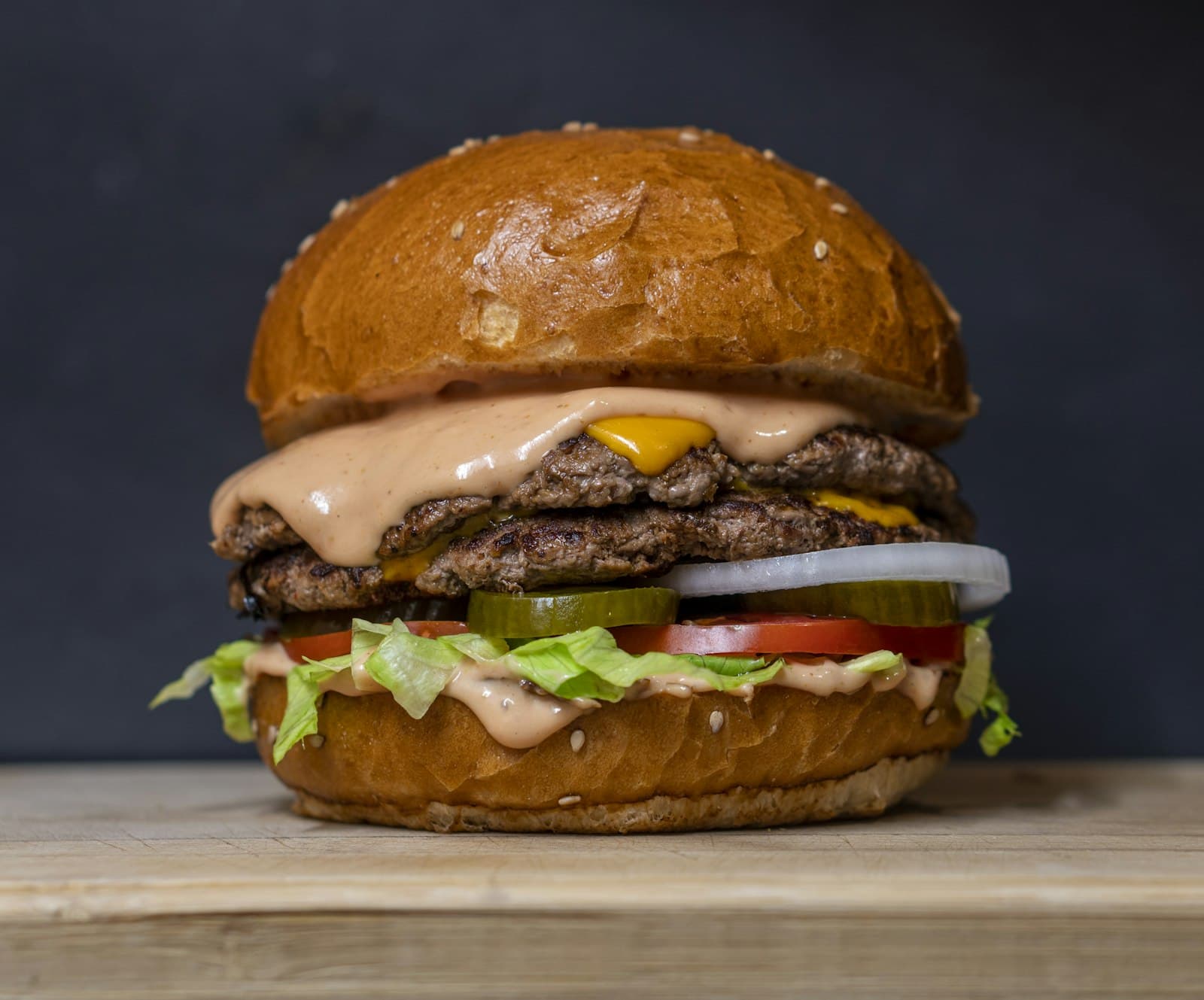
Toast the cut sides of the buns on the grill or in the pan for about 1 minute, until golden. Spread the sauce on the buns, then add lettuce, a patty, tomato, onion and pickles. Serve right away.
Recipe Tips
- Keep the beef cold until you shape it. Warm fat smears and the patties turn dense instead of tender.
- Salt only the outside, right before cooking. Salt mixed into the beef ahead of time gives the burgers a firm, sausage-like texture.
- Use a thermometer rather than the colour of the meat. Ground beef can stay pink at a safe temperature or turn brown before it is safe.
Variations
- Bacon cheeseburgers: top each patty with 2 strips of crispy bacon along with the cheese.
- Mushroom Swiss: swap the cheddar for Swiss cheese and pile on mushrooms sautéed in butter with a pinch of thyme.
- Lettuce wraps: skip the buns and wrap each patty in large butter lettuce or iceberg leaves.
Nutrition (per serving)
| Calories | 660 |
|---|---|
| Protein | 40 g |
| Carbs | 31 g |
| Fat | 42 g |
| Saturated fat | 15 g |
| Fibre | 2 g |
| Sugar | 6 g |
| Sodium | 1250 mg |
Estimated from the listed ingredients; values vary by brand.
Related Recipes
Storing & Reheating
- Fridge
- Refrigerate cooked patties within 2 hours in an airtight container for up to 3 days. Store the sauce separately for up to 5 days.
- Freezer
- Freeze raw shaped patties between squares of parchment for up to 3 months, or cooked patties for up to 2 months.
- Reheat
- Reheat cooked patties in a covered skillet with a splash of water over medium-low heat until hot to 74°C (165°F). Cook frozen raw patties straight from frozen, adding 2-3 minutes per side, until 71°C (160°F).
Classic Homemade Beef Burgers FAQs
What is the best ground beef for burgers?
Ground beef labelled 80/20, meaning 80% lean and 20% fat, makes the juiciest burgers. Leaner beef such as 90/10 works, but the patties dry out faster, so take them off the heat as soon as they reach 71°C (160°F).
How long do you cook burgers on each side?
Patties about 2 cm thick take 4-5 minutes per side over medium-high heat on a grill or in a cast-iron skillet. Check the centre with a thermometer; ground beef burgers are done at 71°C (160°F).
Why do burgers puff up in the middle?
As the patty cooks, the edges shrink and push the centre upward. Pressing a shallow dimple into the middle of each raw patty with your thumb keeps it flat, so it sits neatly on the bun.
Should I add egg or breadcrumbs to burger patties?
No. Egg and breadcrumbs bind meatloaf and meatballs, but they give burgers a soft, bready texture. Good-quality 80/20 beef holds together on its own if you shape it gently and keep it cold.
Can I make burger patties ahead of time?
Yes. Shape the patties, stack them between parchment and refrigerate for up to 1 day, or freeze them for up to 3 months. Season with salt only just before cooking.
Disclaimer
- Nutrition information is an estimate based on the listed ingredients. It changes with the brands, portion sizes and swaps you use.
- Read ingredient labels for allergens and for diet claims such as gluten-free or vegan. Products and their ingredients can change.
- Cooking times are a guide, since ovens, air fryers and slow cookers all run differently. Use a food thermometer and cook meat, poultry and fish to the safe internal temperatures in government food safety guidance.
- This recipe is general information, not medical or nutrition advice. If you have an allergy, a health condition or a special diet, check with a qualified health professional.