Classic Lasagna
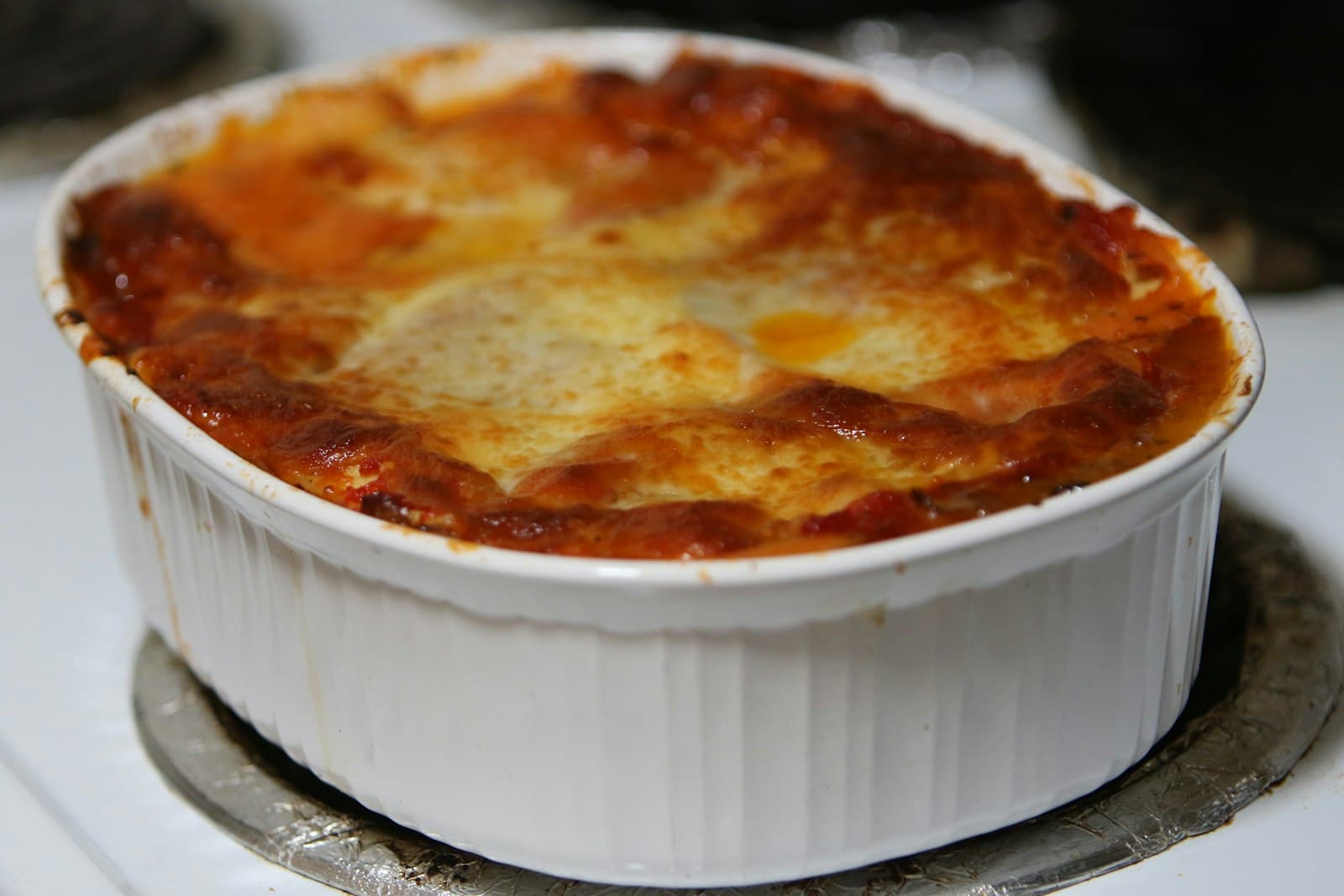
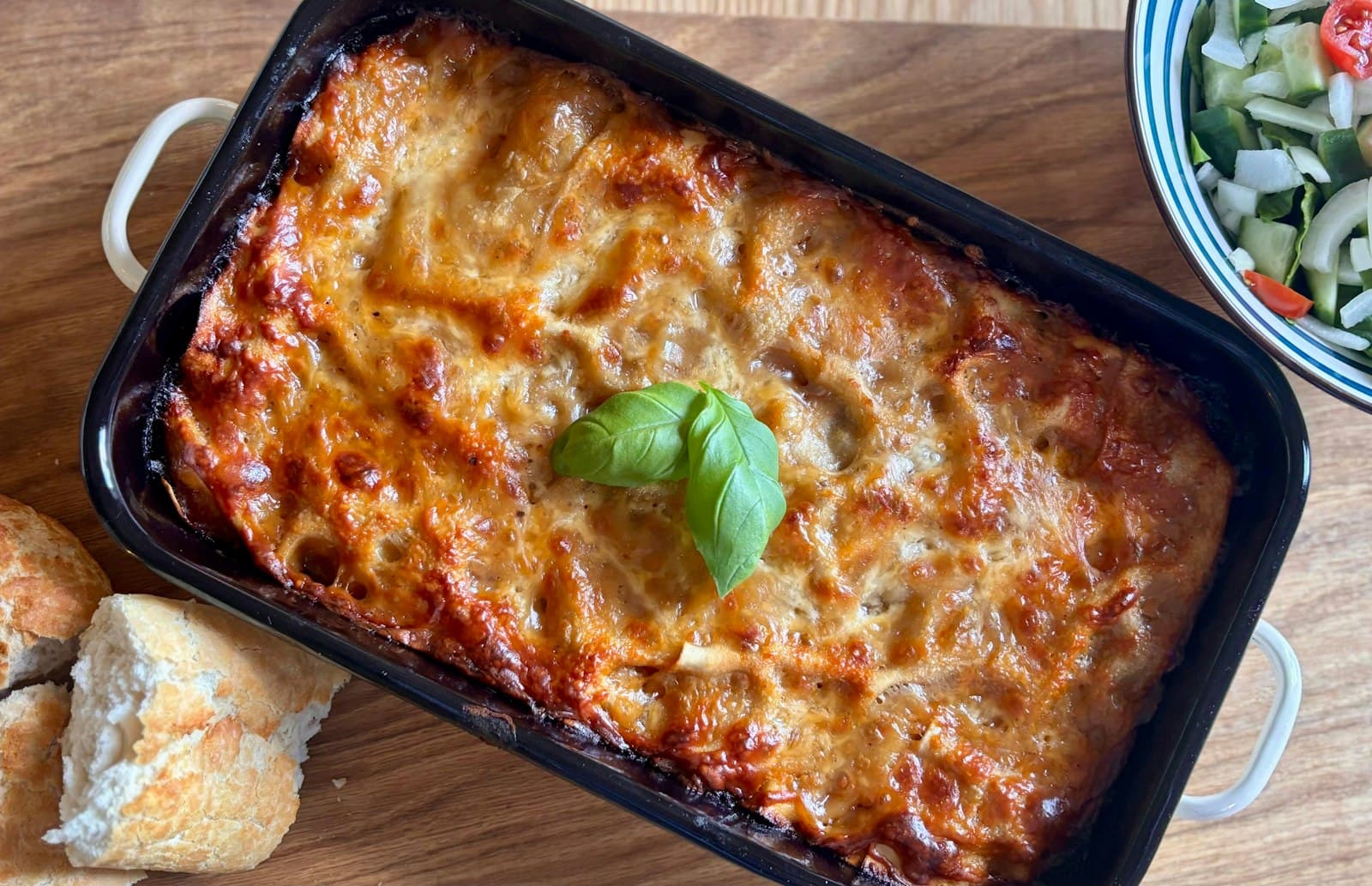
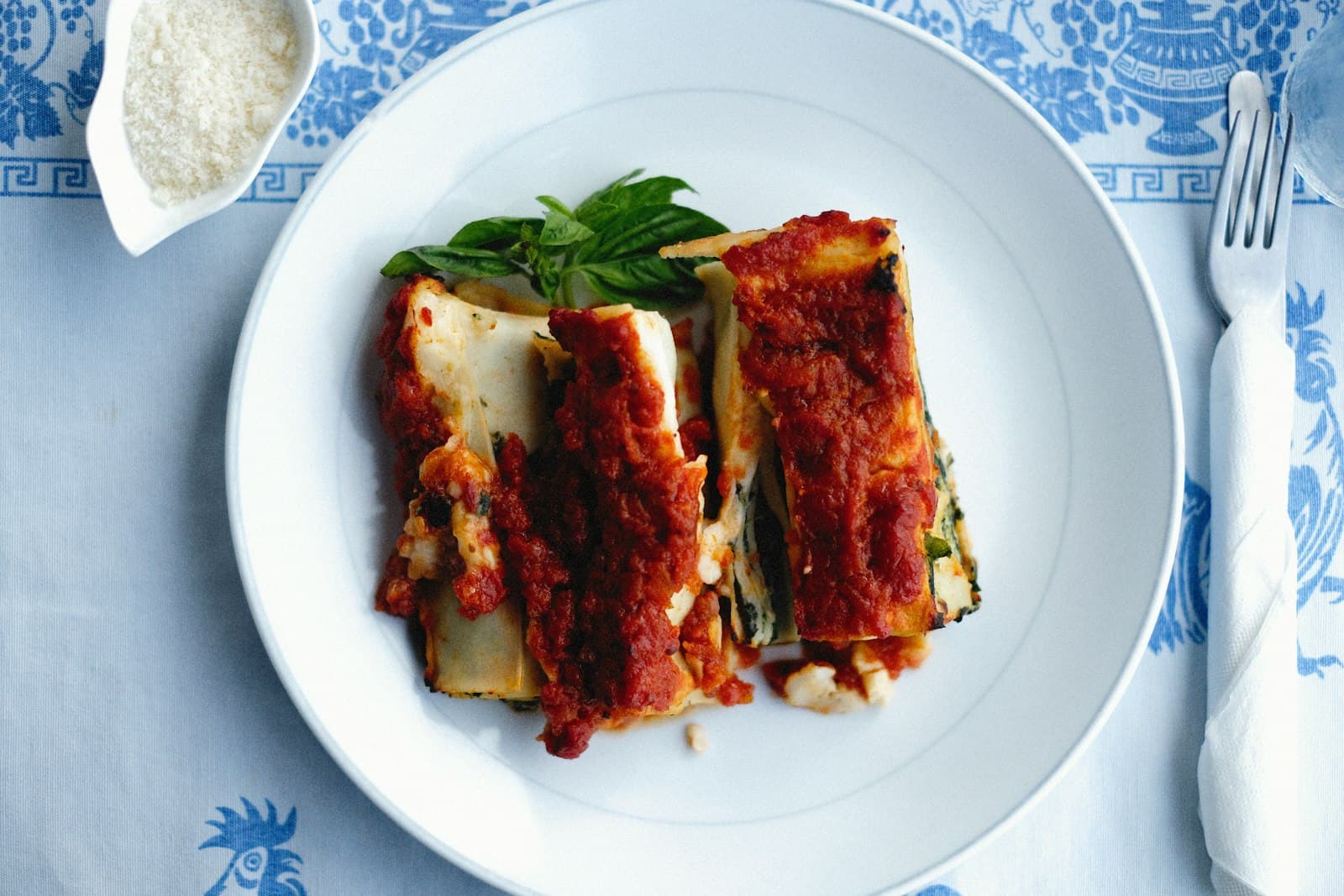
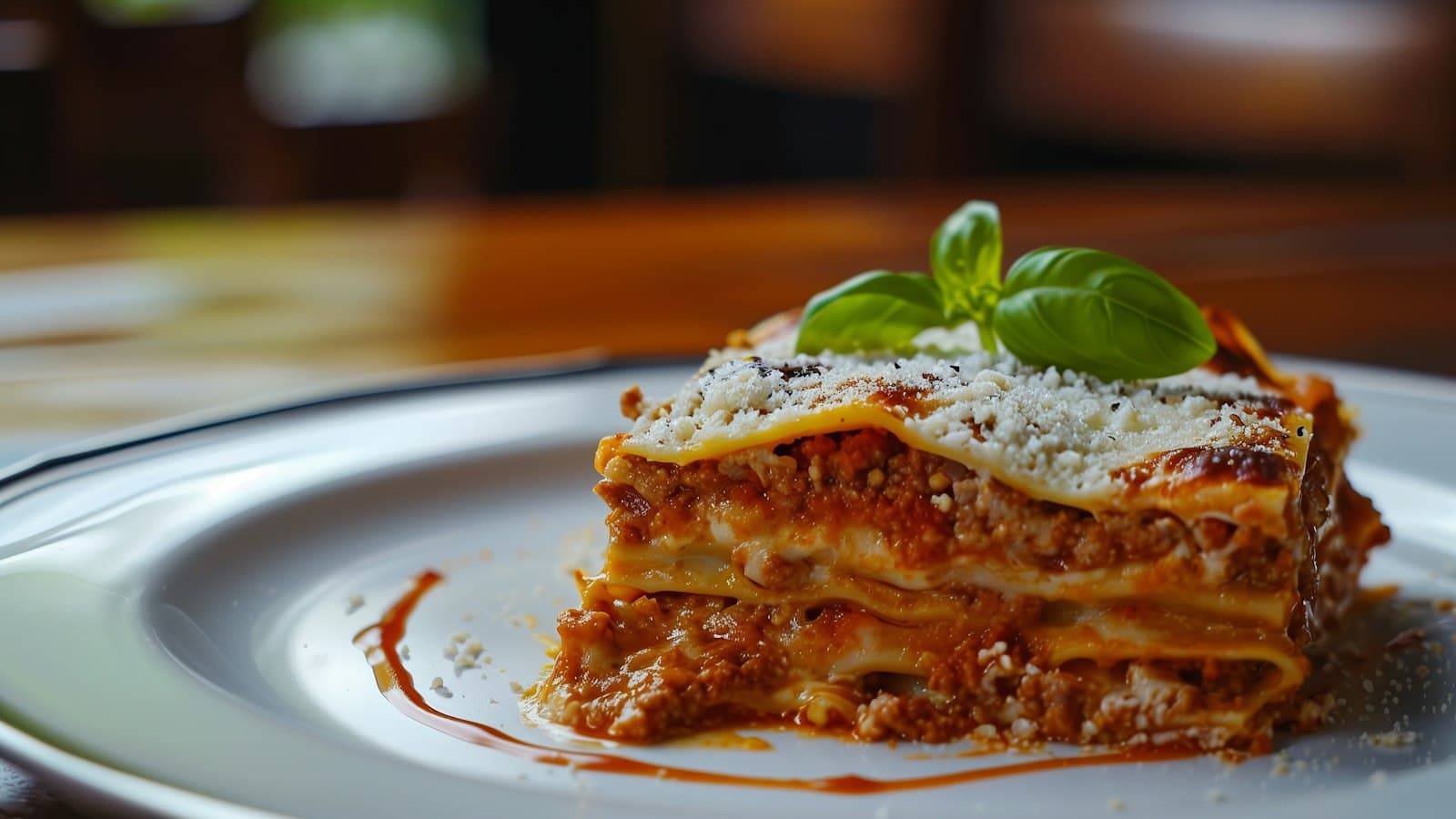
This lasagna recipe builds three tall layers from a thick beef and tomato meat sauce, a seasoned ricotta and parmesan filling and plenty of mozzarella. The sauce simmers long enough to lose its excess water, the noodles are cooked just short of tender so they finish in the oven, and a 15-minute rest before cutting gives you clean, neat slices instead of a sliding heap.
By Luca Ferraro
Published
- Prep Time
- 30 mins
- Cook Time
- 1 hr 35 mins
- Rest
- 15 mins
- Total Time
- 2 hrs 20 mins
- Servings
- 12 servings
How do you make Classic Lasagna?
Simmer a sauce of 750 g browned ground beef, onion, garlic, crushed tomatoes and passata for 30 minutes. Mix 500 g ricotta with an egg and parmesan. Layer sauce, 12 boiled noodles, ricotta and 450 g mozzarella in a 23 x 33 cm dish. Bake at 190°C (375°F), covered for 25 minutes, then uncovered for 25 minutes, until bubbling and 74°C (165°F) in the centre. Rest 15 minutes.
- Total time
- 2 hrs 20 mins
- Calories
- 480 per serving
- Protein
- 34 g
- Yield
- 12 servings
- Difficulty
- Medium
- Method
- Baking
Ingredients
Meat sauce
Ricotta filling
Layers
Equipment
23 x 33 cm (9 x 13 in) baking dish, at least 7 cm deep · Large deep skillet or Dutch oven · Large pot · Mixing bowl · Rimmed baking sheet · Aluminum foil · Instant-read thermometer
Quick Directions
Brown the beef
Heat the olive oil in a large deep skillet or Dutch oven over medium heat.
Simmer the meat sauce
Stir in the tomato paste and cook for 1-2 minutes until it darkens slightly.
Boil the noodles
While the sauce simmers, cook the noodles in a large pot of well-salted boiling water for 2 minutes less than the package says, so they are still firm.
Mix the ricotta filling
Heat the oven to 190°C (375°F).
Layer the lasagna
Spread 250 ml (1 cup) of meat sauce over the bottom of the baking dish.
Bake covered
Lightly oil the underside of a sheet of foil, or tent it so it doesn't touch the cheese, and cover the dish.
Uncover and brown
Remove the foil and bake for another 25-30 minutes, until the cheese is golden in spots and the sauce bubbles at the edges.
Rest and slice
Let the lasagna rest for 15-20 minutes so the cheese and sauce set.
Step-by-Step Instructions
Follow these detailed steps to make the perfect classic lasagna.
Brown the beef
Heat the olive oil in a large deep skillet or Dutch oven over medium heat. Cook the onion for 5-7 minutes until soft and translucent, then add the garlic and cook for 1 minute. Turn the heat to medium-high, add the beef and break it up with a wooden spoon. Cook for 8-10 minutes until browned with no pink remaining; ground beef is safe at 71°C (160°F). Spoon off any excess fat.
Simmer the meat sauce
Stir in the tomato paste and cook for 1-2 minutes until it darkens slightly. Add the crushed tomatoes, passata, water, oregano, dried basil, salt, pepper and sugar, if using. Bring to a simmer, partly cover and cook on low for 30 minutes, stirring every so often, until the sauce is thick enough that a spoon dragged through it leaves a trail. Stir in the fresh basil and taste for salt.
Boil the noodles
While the sauce simmers, cook the noodles in a large pot of well-salted boiling water for 2 minutes less than the package says, so they are still firm. Drain, rinse briefly with cool water and lay them flat in a single layer on a lightly oiled baking sheet so they don't stick together.
Mix the ricotta filling
Heat the oven to 190°C (375°F). In a mixing bowl, stir together the ricotta, egg, half the parmesan (50 g), parsley, salt, pepper and a pinch of nutmeg until smooth.
Layer the lasagna
Spread 250 ml (1 cup) of meat sauce over the bottom of the baking dish. Lay 4 noodles on top, overlapping slightly. Spread half the ricotta filling over the noodles, scatter over a third of the mozzarella and spoon over a third of the remaining sauce. Repeat with 4 more noodles, the rest of the ricotta, another third of the mozzarella and another third of the sauce. Finish with the last 4 noodles, the remaining sauce, the remaining mozzarella and the remaining 50 g parmesan.
Bake covered
Lightly oil the underside of a sheet of foil, or tent it so it doesn't touch the cheese, and cover the dish. Set it on a rimmed baking sheet to catch drips and bake for 25 minutes.
Uncover and brown
Remove the foil and bake for another 25-30 minutes, until the cheese is golden in spots and the sauce bubbles at the edges. The centre should read 74°C (165°F) on an instant-read thermometer. For deeper colour, switch to the grill (broiler) for 1-2 minutes, watching closely.
Rest and slice
Let the lasagna rest for 15-20 minutes so the cheese and sauce set. Cut into 12 squares with a sharp knife and lift them out with a flat spatula.
Recipe Tips
- Keep the sauce thick. A thin, watery sauce is the most common reason lasagna slices collapse, so simmer until a spoon leaves a trail across the pan.
- If your ricotta looks wet, drain it in a fine sieve for 15 minutes before mixing the filling.
- Use low-moisture mozzarella, sold in blocks or bags of shreds. Fresh mozzarella in brine releases water as it melts.
- Don't skip the rest. Lasagna cut straight from the oven runs all over the plate; after 15 minutes it holds clean layers.
Variations
- Beef and pork or sausage: swap half the beef for ground pork or Italian sausage with the casings removed, and cook it until it reaches 71°C (160°F).
- No-boil noodles: use the same number of oven-ready sheets, add an extra 125 ml of water to the sauce, and bake covered for 35 minutes before uncovering.
- Cottage cheese filling: use 500 g full-fat cottage cheese in place of the ricotta for a slightly tangier, looser layer.
Nutrition (per serving)
| Calories | 480 |
|---|---|
| Protein | 34 g |
| Carbs | 30 g |
| Fat | 24 g |
| Saturated fat | 12.5 g |
| Fibre | 3 g |
| Sugar | 6.5 g |
| Sodium | 990 mg |
Estimated from the listed ingredients; values vary by brand.
Related Recipes
Storing & Reheating
- Fridge
- Cool, cover and refrigerate within 2 hours for up to 4 days.
- Freezer
- Freeze the whole lasagna, baked or unbaked, or individual slices wrapped tightly in plastic wrap and foil for up to 3 months. Thaw overnight in the fridge.
- Reheat
- Reheat slices covered at 180°C (350°F) for 20-30 minutes, or a whole thawed lasagna for 45-60 minutes, until hot to 74°C (165°F) in the centre. Single slices can be microwaved covered for 2-3 minutes, then rested for 1 minute.
Classic Lasagna FAQs
How long do you bake lasagna at 190°C (375°F)?
About 50-55 minutes in total: 25 minutes covered with foil, then 25-30 minutes uncovered until the cheese is golden, the edges bubble and the centre reaches 74°C (165°F). Rest it for 15 minutes before cutting.
Should lasagna be covered when baking?
Cover it for the first half of baking so the noodles soften and the centre heats through without the top burning. Uncover it for the second half so the cheese browns and some surface moisture cooks off.
Why does lasagna turn out watery?
Watery lasagna usually comes from a sauce that was not simmered long enough, wet ricotta, fresh mozzarella, or noodles that were not drained well. Cutting it before it has rested for 15 minutes also lets the liquid run out.
Can I make lasagna ahead of time?
Yes. Assemble it up to 24 hours ahead, cover tightly and refrigerate. Bake it straight from the fridge, adding 10-15 minutes to the covered baking time, until the centre reaches 74°C (165°F).
Can I use cottage cheese instead of ricotta in lasagna?
Yes. Full-fat cottage cheese works in the same amount and gives a slightly tangier, looser filling. Drain any liquid on top first, and blend it briefly if you prefer a smoother texture.
How many layers should a lasagna have?
Three layers of noodles is standard for a 23 x 33 cm (9 x 13 in) dish that is about 7 cm deep. It gives tall slices without overflowing the pan. A deeper dish can hold a fourth layer if you increase the sauce and cheese.
Disclaimer
- Nutrition information is an estimate based on the listed ingredients. It changes with the brands, portion sizes and swaps you use.
- Read ingredient labels for allergens and for diet claims such as gluten-free or vegan. Products and their ingredients can change.
- Cooking times are a guide, since ovens, air fryers and slow cookers all run differently. Use a food thermometer and cook meat, poultry and fish to the safe internal temperatures in government food safety guidance.
- This recipe is general information, not medical or nutrition advice. If you have an allergy, a health condition or a special diet, check with a qualified health professional.