Pico de Gallo
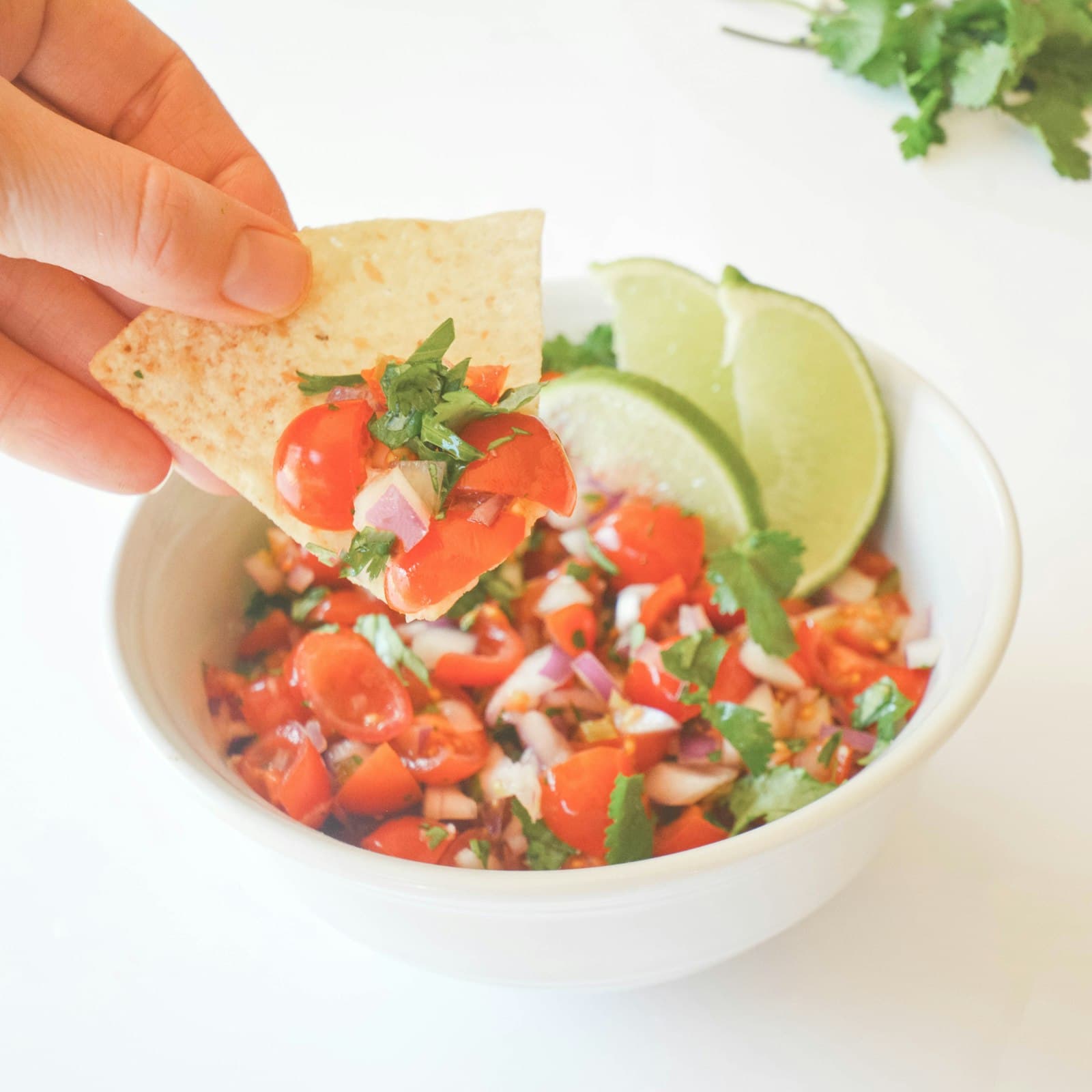
Pico de gallo is the simplest salsa there is: chopped tomato, onion, chili and cilantro brightened with lime and salt. Because nothing is cooked, the tomatoes matter most, so use the ripest ones you can find. Spoon it over tacos, eggs or grilled fish, or scoop it up with tortilla chips.
Published
- Prep Time
- 15 mins
- Cook Time
- No cook
- Rest
- 15 mins
- Total Time
- 30 mins
- Servings
- About 3 cups
How do you make Pico de Gallo?
Seed and dice 500 g ripe plum tomatoes (about 6). Mix with 1/2 cup finely diced white onion, 1-2 seeded and minced jalapeños, 1/3 cup chopped cilantro, 2 tbsp lime juice and 1/2 tsp salt. Let it stand for 15 minutes so the flavours blend, then taste, adjust the salt and lime, and serve with a slotted spoon.
- Total time
- 30 mins
- Calories
- 20 per serving
- Protein
- 0.7 g
- Yield
- About 3 cups
- Difficulty
- Easy
- Method
- No-cook
Ingredients
Equipment
Sharp knife · Cutting board · Mixing bowl · Disposable gloves
Quick Directions
Prep the tomatoes
Cut the tomatoes in half and scoop out the seeds and watery pulp with a teaspoon.
Chop the aromatics
Finely dice the onion.
Season and rest
Add the lime juice and salt and stir gently.
Taste and serve
Taste and add more salt, lime or chili as needed.
Step-by-Step Instructions
Follow these detailed steps to make the perfect pico de gallo.
Prep the tomatoes
Cut the tomatoes in half and scoop out the seeds and watery pulp with a teaspoon. Dice the flesh into 1 cm (1/2 inch) pieces and put them in a bowl.
Chop the aromatics
Finely dice the onion. Wearing gloves, seed and finely chop the jalapeños, then chop the cilantro. Add everything to the tomatoes.
Season and rest
Add the lime juice and salt and stir gently. Let the salsa stand for 15 minutes so the salt draws out the tomato juices and the flavours blend.
Taste and serve
Taste and add more salt, lime or chili as needed. Serve with a slotted spoon so the extra juice stays in the bowl.
Recipe Tips
- Seeding the tomatoes keeps the salsa chunky instead of watery. Save the seeds and juice for soups or sauces.
- For a milder bite, rinse the diced onion in a sieve under cold water and shake it dry.
- Most of a jalapeño's heat sits in the white ribs and seeds. Leave a few in for a spicier salsa.
- Salt the salsa close to serving time. The longer it sits, the more liquid the tomatoes release.
Variations
- Mango pico: swap half the tomatoes for diced ripe mango and use red onion.
- Cucumber pico: add 1 cup seeded, diced cucumber for extra crunch.
- Avocado pico: fold in 1 diced avocado just before serving.
Nutrition (per serving)
| Calories | 20 |
|---|---|
| Protein | 0.7 g |
| Carbs | 4 g |
| Fat | 0.2 g |
| Saturated fat | 0 g |
| Fibre | 1 g |
| Sugar | 2 g |
| Sodium | 150 mg |
Estimated from the listed ingredients; values vary by brand.
Related Recipes
Storing & Reheating
- Fridge
- Refrigerate in an airtight container for up to 2 days. Drain off the extra liquid and stir before serving. Don't leave it at room temperature for more than 2 hours.
Pico de Gallo FAQs
What is the difference between pico de gallo and salsa?
Pico de gallo is a type of fresh salsa made from chopped raw tomato, onion, chili, cilantro, lime and salt. It is chunky with very little liquid, while many other salsas are blended, cooked, or made with tomatillos or dried chilies.
How do you keep pico de gallo from getting watery?
Scoop the seeds and watery pulp out of the tomatoes before dicing, use firm plum tomatoes, and add the salt shortly before serving. Serve with a slotted spoon so any juice that collects stays behind.
How long does pico de gallo last in the fridge?
Fresh pico de gallo keeps for up to 2 days in an airtight container in the fridge. It tastes best on the first day, while the onion and tomato are still crisp.
What tomatoes are best for pico de gallo?
Plum (Roma) tomatoes are the best choice because they are meaty and have fewer seeds. Ripe vine or cherry tomatoes also work; seed them well and let the diced tomato drain for a few minutes.
Disclaimer
- Nutrition information is an estimate based on the listed ingredients. It changes with the brands, portion sizes and swaps you use.
- Read ingredient labels for allergens and for diet claims such as gluten-free or vegan. Products and their ingredients can change.
- Cooking times are a guide, since ovens, air fryers and slow cookers all run differently. Use a food thermometer and cook meat, poultry and fish to the safe internal temperatures in government food safety guidance.
- This recipe is general information, not medical or nutrition advice. If you have an allergy, a health condition or a special diet, check with a qualified health professional.