Korean Ground Beef Bowls
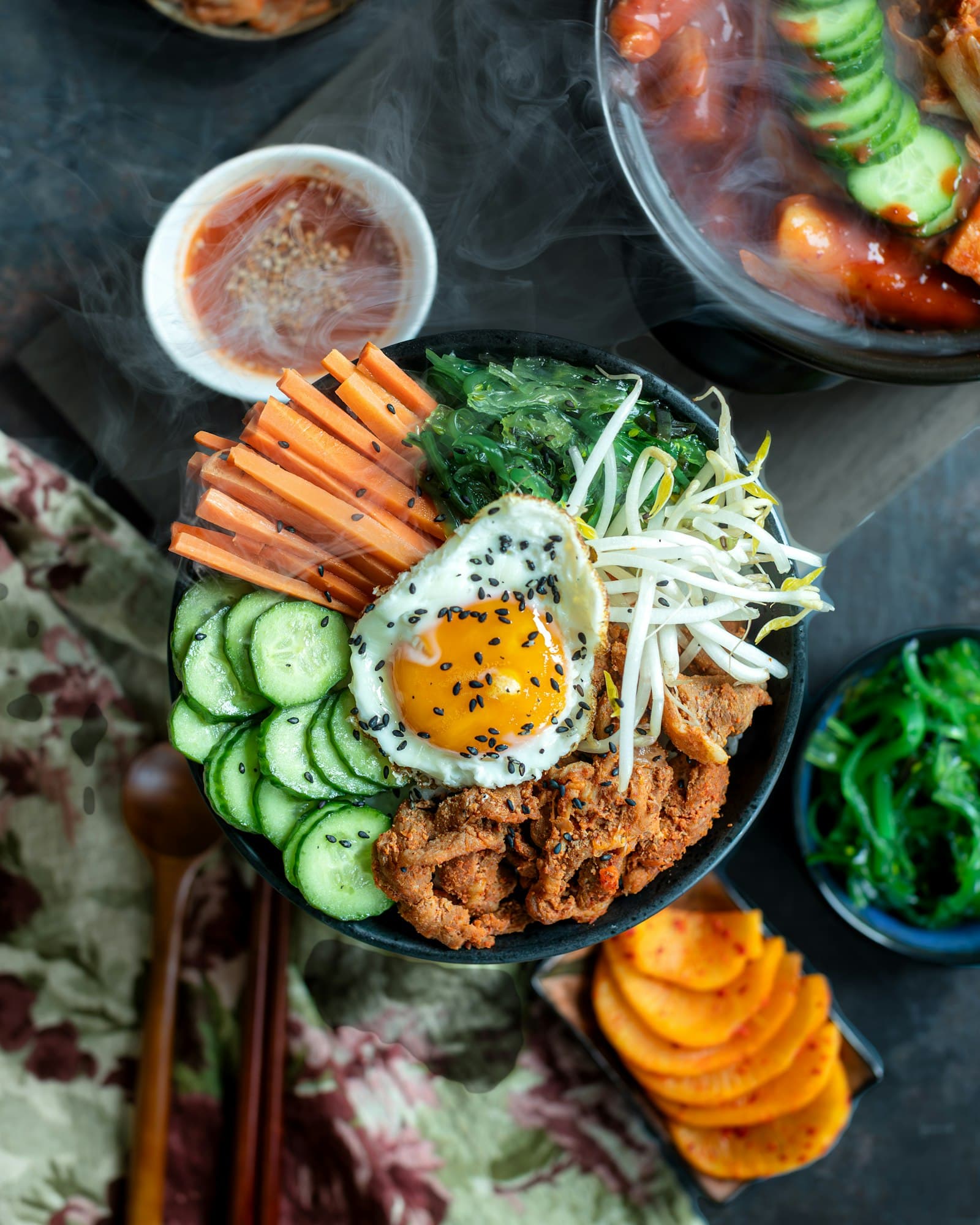
Korean ground beef bowls borrow the sweet and savoury flavours of soy, garlic, ginger and sesame and put them on a weeknight timetable. Lean ground beef browns fast, then a simple sauce with a spoonful of gochujang cooks down into a glossy glaze. Fresh cucumber and carrot on top add crunch against the rich beef.
By Ben Kowalski
Published
- Prep Time
- 10 mins
- Cook Time
- 20 mins
- Total Time
- 30 mins
- Servings
- 4 servings
How do you make Korean Ground Beef Bowls?
Brown 500 g lean ground beef in sesame oil until it reaches 71°C (160°F), add garlic and ginger, then stir in a sauce of soy sauce, brown sugar, gochujang and a splash of water. Simmer for 2-3 minutes until glossy, add green onions and spoon over steamed rice with cucumber, carrot, sesame seeds and a fried egg if you like.
- Total time
- 30 mins
- Calories
- 600 per serving
- Protein
- 33 g
- Yield
- 4 servings
- Difficulty
- Easy
- Method
- Stir-frying
Ingredients
Sauce
Beef
Bowls
Equipment
Large skillet or wok · Saucepan or rice cooker · Small bowl · Wooden spoon
Quick Directions
Cook the rice
Rinse the rice until the water runs almost clear, then cook it in a saucepan or rice cooker according to the package directions.
Mix the sauce
While the rice cooks, whisk the soy sauce, brown sugar, gochujang, rice vinegar and water in a small bowl until the sugar and gochujang dissolve.
Brown the beef
Heat 1 tbsp sesame oil in a large skillet or wok over medium-high heat.
Add the aromatics and sauce
Push the beef to one side, add the garlic and ginger to the cleared space and cook for 30-60 seconds, until fragrant, then stir everything together.
Build the bowls
Divide the rice between 4 bowls and spoon the beef over the top.
Step-by-Step Instructions
Follow these detailed steps to make the perfect korean ground beef bowls.
Cook the rice
Rinse the rice until the water runs almost clear, then cook it in a saucepan or rice cooker according to the package directions. If you are using leftover rice, reheat it until steaming hot.
Mix the sauce
While the rice cooks, whisk the soy sauce, brown sugar, gochujang, rice vinegar and water in a small bowl until the sugar and gochujang dissolve.
Brown the beef
Heat 1 tbsp sesame oil in a large skillet or wok over medium-high heat. Add the beef and break it up with a wooden spoon. Cook for 6-8 minutes, until browned with no pink remaining and it reaches 71°C (160°F). Spoon off any excess fat.
Add the aromatics and sauce
Push the beef to one side, add the garlic and ginger to the cleared space and cook for 30-60 seconds, until fragrant, then stir everything together. Pour in the sauce and simmer for 2-3 minutes, until it reduces to a glossy glaze. Stir in most of the green onions and the remaining 1 tsp sesame oil.
Build the bowls
Divide the rice between 4 bowls and spoon the beef over the top. Add the cucumber and carrot, sprinkle with sesame seeds and the remaining green onions, and top each bowl with a fried egg and some kimchi if you like.
Recipe Tips
- Grate the ginger and garlic on a fine grater so they melt into the sauce instead of leaving chunky bits.
- Gochujang brands vary in heat. Start with 1 tablespoon, taste the sauce, and add more if you want it spicier.
- Day-old rice works well here. Reheat it with a splash of water, covered, until steaming.
Variations
- Lettuce wraps: spoon the beef into butter lettuce leaves and top with the cucumber, carrot and sesame seeds.
- Ground turkey or chicken: swap the beef and cook it until it reaches 74°C (165°F).
- Extra vegetables: stir-fry 200 g broccoli florets or sliced mushrooms with the beef before adding the sauce.
Nutrition (per serving)
| Calories | 600 |
|---|---|
| Protein | 33 g |
| Carbs | 73 g |
| Fat | 18.5 g |
| Saturated fat | 6 g |
| Fibre | 2 g |
| Sugar | 8.5 g |
| Sodium | 780 mg |
Estimated from the listed ingredients; values vary by brand.
Related Recipes
Storing & Reheating
- Fridge
- Refrigerate the beef and rice in separate airtight containers within 2 hours for up to 4 days. Keep the fresh vegetables separate so they stay crisp.
- Freezer
- Freeze the cooked beef for up to 3 months. Thaw overnight in the fridge.
- Reheat
- Reheat the beef in a skillet with a splash of water, or in the microwave, until hot to 74°C (165°F). Reheat rice until steaming hot all the way through.
Korean Ground Beef Bowls FAQs
What is gochujang and what can I use instead?
Gochujang is a thick, fermented Korean chili paste that is sweet, savoury and moderately spicy. If you cannot find it, use 1-2 teaspoons of sriracha or another chili sauce, plus an extra teaspoon of brown sugar.
Are Korean ground beef bowls spicy?
With 1 tablespoon of gochujang they are mild, with gentle warmth rather than heat. Leave the gochujang out for a kid-friendly version, or add more, or a pinch of Korean chili flakes, for extra spice.
Can I meal prep Korean ground beef bowls?
Yes. Pack the beef and rice in containers and keep the cucumber and carrot separate. They keep for up to 4 days in the fridge. Reheat the beef and rice until hot, then add the cold vegetables.
What else can I serve Korean ground beef with?
Try it over cauliflower rice or noodles, in lettuce wraps, or with steamed broccoli and kimchi on the side.
Can I use regular soy sauce?
Yes, but the dish will be noticeably saltier. Use 3 tablespoons of regular soy sauce plus 1 tablespoon of water in place of the 1/4 cup low-sodium soy sauce, then taste before adding more.
Disclaimer
- Nutrition information is an estimate based on the listed ingredients. It changes with the brands, portion sizes and swaps you use.
- Read ingredient labels for allergens and for diet claims such as gluten-free or vegan. Products and their ingredients can change.
- Cooking times are a guide, since ovens, air fryers and slow cookers all run differently. Use a food thermometer and cook meat, poultry and fish to the safe internal temperatures in government food safety guidance.
- This recipe is general information, not medical or nutrition advice. If you have an allergy, a health condition or a special diet, check with a qualified health professional.