Miso Soup
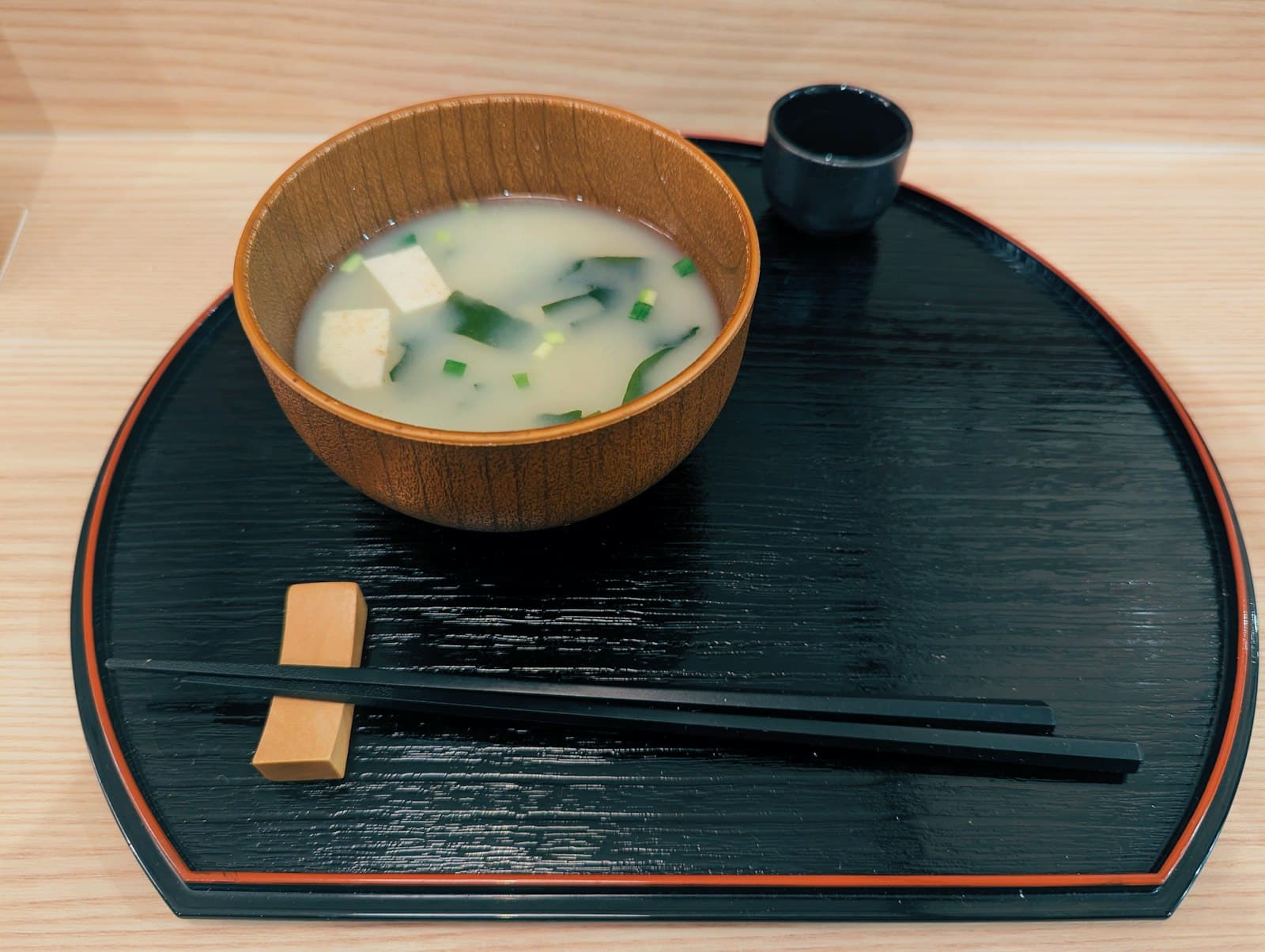
Miso soup is a regular part of traditional Japanese meals, and one of the simplest soups you can make: a light dashi stock, a few spoonfuls of miso paste, soft tofu and seaweed. Making the dashi from scratch takes about 15 minutes and gives the cleanest, most savoury flavour. On busy days, instant dashi granules get the soup on the table in 10 minutes.
By Mei Lin Tan
Published
- Prep Time
- 5 mins
- Cook Time
- 20 mins
- Total Time
- 25 mins
- Servings
- 4 servings
How do you make Miso Soup?
Make dashi by heating 10 g kombu in 1.1 L water until just before boiling, then steeping 15 g bonito flakes for 3 minutes and straining. Simmer 200 g cubed silken tofu and rehydrated wakame in the dashi for 2 minutes. Turn the heat to low, dissolve 3-4 tbsp miso in the soup without boiling it, and top with sliced green onions.
- Total time
- 25 mins
- Calories
- 62 per serving
- Protein
- 5 g
- Yield
- 4 servings
- Difficulty
- Easy
- Method
- Simmering
Ingredients
Dashi
Soup
Equipment
Medium saucepan · Fine-mesh sieve · Paper towel or cheesecloth · Small bowl · Ladle · Chopsticks or a small whisk
Quick Directions
Soak the wakame
Soak the wakame in cold water for 5 minutes, then drain.
Heat the kombu
Heat the kombu slowly in the water and remove it before boiling.
Steep the bonito flakes
Steep the bonito flakes for 3 minutes, then strain the dashi.
Add the tofu and wakame
Simmer the tofu and wakame in the dashi for 2 minutes.
Dissolve the miso
Dissolve the miso in the soup over low heat.
Serve
Heat the soup until it is steaming but do not let it boil, because boiling dulls the aroma of the miso.
Step-by-Step Instructions
Follow these detailed steps to make the perfect miso soup.
Soak the wakame
Put the wakame in a small bowl, cover with cold water and soak for 5 minutes until soft and expanded. Drain, squeeze out the excess water and cut any large pieces into bite-size strips.
Heat the kombu
Put the water and kombu in the saucepan over medium-low heat. Heat slowly for about 10 minutes, until small bubbles form around the kombu and the water is just below a simmer. Lift out the kombu before the water boils, because boiled kombu can make the dashi slimy and bitter.
Steep the bonito flakes
Bring the water to the boil, add the bonito flakes and turn off the heat straight away. Leave for 3 minutes, until the flakes sink. Strain through a sieve lined with paper towel into a bowl without pressing the flakes, then pour the dashi back into the rinsed saucepan. You should have about 1 L. If you are using instant dashi, simply dissolve the granules in 1 L of water in the saucepan instead.
Add the tofu and wakame
Bring the dashi to a gentle simmer over medium heat. Slide in the tofu cubes and the wakame and simmer for 2 minutes, until the tofu is warmed through. Stir gently so the tofu does not break.
Dissolve the miso
Turn the heat to low. Put 3 tbsp of the miso in a ladle, lower it partly into the soup and stir with chopsticks or a small whisk until the miso has dissolved into the broth. Taste, and add the last tablespoon the same way if you like a stronger soup.
Serve
Heat the soup until it is steaming but do not let it boil, because boiling dulls the aroma of the miso. Ladle into bowls, scatter with the green onions and serve straight away.
Recipe Tips
- Add the miso at the end and keep the soup below the boil. Boiled miso loses much of its aroma and can turn slightly grainy.
- Miso varies a lot in saltiness. White miso is mild and slightly sweet, while red miso is stronger and saltier, so start with less if you use red.
- Most instant dashi granules already contain salt, so taste before adding the last spoonful of miso.
- Do not wash the white powder off the kombu. It is part of the flavour; just wipe off any grit with a dry cloth.
Variations
- Vegan miso soup: soak 10 g kombu and 4 dried shiitake mushrooms in 1.1 L water for at least 30 minutes, then heat as in step 2 and strain. Slice the shiitake into the soup, and check that your miso has no added dashi.
- Add vegetables such as thinly sliced onion, daikon radish or mushrooms, and simmer them in the dashi until tender before adding the tofu.
- Swap the wakame for a handful of baby spinach, added with the tofu.
Nutrition (per serving)
| Calories | 62 |
|---|---|
| Protein | 5 g |
| Carbs | 6 g |
| Fat | 2 g |
| Saturated fat | 0.3 g |
| Fibre | 1 g |
| Sugar | 1 g |
| Sodium | 600 mg |
Estimated from the listed ingredients; values vary by brand.
Related Recipes
Storing & Reheating
- Fridge
- Refrigerate plain dashi for up to 3 days. Leftover miso soup keeps for up to 2 days in an airtight container.
- Freezer
- Freeze plain dashi, without the miso, tofu or wakame, in portions for up to 3 months.
- Reheat
- Warm the soup gently over medium-low heat until steaming hot, without letting it boil.
Miso Soup FAQs
What is dashi, and where can I buy it?
Dashi is a light Japanese stock made from kombu (dried kelp) and bonito flakes (dried, smoked skipjack tuna). It gives miso soup its savoury depth. Kombu, bonito flakes and instant dashi granules are sold in Asian grocery stores and the international aisle of many supermarkets.
Which miso is best for miso soup?
Any miso works. White (shiro) miso is mild and slightly sweet, which makes it a good place to start. Mixed (awase) miso is more rounded, and red (aka) miso is the strongest and saltiest. Adjust the amount to taste.
Why shouldn't miso soup boil?
Boiling dulls the aroma of miso and can make it grainy. Add the miso at the end over low heat, and when you reheat leftovers, warm them gently until steaming rather than bringing them to the boil.
Is miso soup vegetarian?
Not this version, because the dashi is made with bonito flakes, which are fish. For a vegetarian and vegan miso soup, make the dashi with kombu and dried shiitake mushrooms instead, and check that the miso has no added dashi.
Disclaimer
- Nutrition information is an estimate based on the listed ingredients. It changes with the brands, portion sizes and swaps you use.
- Read ingredient labels for allergens and for diet claims such as gluten-free or vegan. Products and their ingredients can change.
- Cooking times are a guide, since ovens, air fryers and slow cookers all run differently. Use a food thermometer and cook meat, poultry and fish to the safe internal temperatures in government food safety guidance.
- This recipe is general information, not medical or nutrition advice. If you have an allergy, a health condition or a special diet, check with a qualified health professional.