Gyudon (Japanese Beef Bowl)
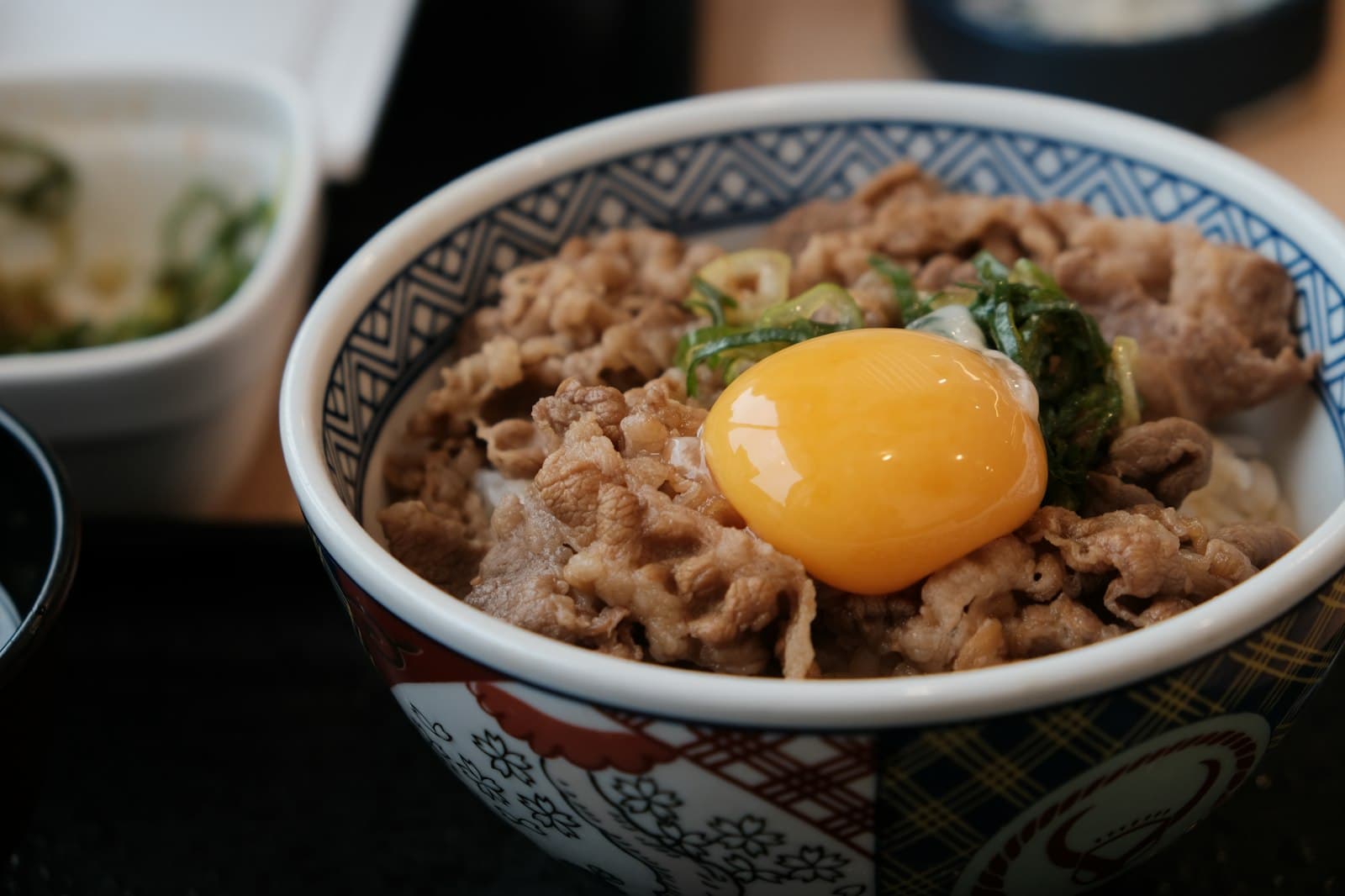
Gyudon is everyday Japanese comfort food: thin slices of beef and soft onion simmered in a sweet-savoury sauce of dashi, soy sauce and mirin, then spooned over hot rice so the sauce soaks in. It is a fast-food staple in Japan and just as quick at home. The beef simmers while the rice steams, so dinner is ready in 30 minutes.
By Mei Lin Tan
Published
- Prep Time
- 5 mins
- Cook Time
- 25 mins
- Total Time
- 30 mins
- Servings
- 4 servings
How do you make Gyudon (Japanese Beef Bowl)?
Simmer a sliced onion for 5 minutes in a sauce of 240 ml dashi, 3 tbsp soy sauce, 2 tbsp mirin, 2 tbsp sake, 1 tbsp sugar and grated ginger. Add 450 g thinly sliced beef and simmer for 2-3 minutes until no longer pink. Spoon the beef, onion and some sauce over hot short-grain rice and top with green onions and pickled ginger.
- Total time
- 30 mins
- Calories
- 560 per serving
- Protein
- 28 g
- Yield
- 4 servings
- Difficulty
- Easy
- Method
- Simmering
Ingredients
Rice
Beef and sauce
To serve
Equipment
Medium saucepan with a tight-fitting lid · Fine-mesh sieve · Large skillet or wide shallow pan · Chopsticks or tongs · Small bowl
Quick Directions
Cook the rice
Rinse the rice, then simmer covered for 13 minutes and rest for 10.
Prepare the beef and sauce
Slice the onion and beef and mix the sauce ingredients.
Simmer the onion
Simmer the onion in the sauce for 5 minutes until soft.
Cook the beef
Simmer the beef for 2-3 minutes until no longer pink.
Assemble the bowls
Fluff the rice and divide it among 4 deep bowls.
Step-by-Step Instructions
Follow these detailed steps to make the perfect gyudon (japanese beef bowl).
Cook the rice
Rinse the rice in a sieve under cold running water, swirling it with your hand, until the water runs almost clear, about 1 minute. Put it in the saucepan with the cold water and bring to the boil over high heat. Cover tightly, turn the heat to its lowest setting and cook for 13 minutes without lifting the lid. Turn off the heat and leave the rice covered to steam for 10 minutes.
Prepare the beef and sauce
While the rice cooks, slice the onion and cut the beef into 5-7 cm pieces. Stir the dashi, soy sauce, mirin, sake, sugar and ginger together in a small bowl until the sugar dissolves.
Simmer the onion
Pour the sauce into a large skillet and bring it to the boil over medium-high heat. Add the onion, lower the heat to a steady simmer and cook for 5 minutes, stirring now and then, until the onion is soft and translucent.
Cook the beef
Add the beef, separating the slices with chopsticks or tongs so they cook evenly. Simmer for 2-3 minutes, skimming off any grey foam, until the beef is no longer pink and has soaked up some of the sauce. Take the pan off the heat straight away, because thin beef turns tough if it cooks too long.
Assemble the bowls
Fluff the rice and divide it among 4 deep bowls. Top with the beef and onion, then spoon over a few tablespoons of the sauce so it soaks into the rice. Finish with green onions, pickled ginger, an egg yolk or soft-boiled egg and a pinch of shichimi togarashi, if using. Serve hot.
Recipe Tips
- To slice your own beef, freeze a piece of ribeye or sirloin for 30-40 minutes until firm, then slice it 2-3 mm thick across the grain with a sharp knife.
- Rinsing the rice washes off surface starch so the grains cook up glossy and separate rather than gummy.
- Gyudon is often topped with a raw egg yolk. Raw eggs are not recommended for young children, pregnant people, older adults or anyone with a weakened immune system, so use pasteurized eggs or a soft-boiled egg instead.
- Look for packs labelled shaved, hot pot, shabu-shabu or sukiyaki beef in the fridge or freezer section. They are already sliced thin enough.
Variations
- Butadon (pork bowl): use thinly sliced pork shoulder or belly and simmer until no pink remains and the pork reaches 71°C (160°F).
- Add 100 g sliced shiitake or button mushrooms with the onion for a deeper, earthier sauce.
- Stir a handful of baby spinach into the pan just before serving for some greens.
Nutrition (per serving)
| Calories | 560 |
|---|---|
| Protein | 28 g |
| Carbs | 73 g |
| Fat | 16 g |
| Saturated fat | 6 g |
| Fibre | 2 g |
| Sugar | 9 g |
| Sodium | 860 mg |
Estimated from the listed ingredients; values vary by brand.
Related Recipes
Storing & Reheating
- Fridge
- Refrigerate the beef and onion with their sauce in an airtight container for up to 3 days. Keep the rice in a separate container.
- Freezer
- Freeze the cooled beef and onion in their sauce for up to 2 months. Thaw overnight in the fridge.
- Reheat
- Reheat the beef and sauce in a small pan over medium heat until steaming hot. Sprinkle the rice with a little water and microwave, covered, until hot.
Gyudon (Japanese Beef Bowl) FAQs
What is gyudon?
Gyudon is a Japanese rice bowl. Gyu means beef and don is short for donburi, a bowl of rice with a topping. Thinly sliced beef and onions are simmered in dashi, soy sauce, mirin and sugar and served over rice, often with pickled red ginger and an egg.
What cut of beef is best for gyudon?
Use thinly sliced beef with some fat, such as ribeye, chuck or beef belly, which stays tender. Packs labelled shaved, hot pot or sukiyaki beef work well. You can also partly freeze a steak and slice it 2-3 mm thick across the grain.
What can I use instead of dashi?
Instant dashi granules dissolved in hot water are the easiest option and keep for months in the pantry. Without dashi, use low-sodium chicken or beef stock. The bowl will taste a little less smoky and savoury but still very good.
Can I make gyudon without sake or mirin?
Yes. Replace the sake with dry white wine, extra dashi or water, and replace the mirin with 2 tbsp water mixed with 2 tsp sugar. The sauce will be slightly less glossy and complex but keeps the same sweet-savoury balance.
Disclaimer
- Nutrition information is an estimate based on the listed ingredients. It changes with the brands, portion sizes and swaps you use.
- Read ingredient labels for allergens and for diet claims such as gluten-free or vegan. Products and their ingredients can change.
- Cooking times are a guide, since ovens, air fryers and slow cookers all run differently. Use a food thermometer and cook meat, poultry and fish to the safe internal temperatures in government food safety guidance.
- This recipe is general information, not medical or nutrition advice. If you have an allergy, a health condition or a special diet, check with a qualified health professional.