Greek Pork Gyros
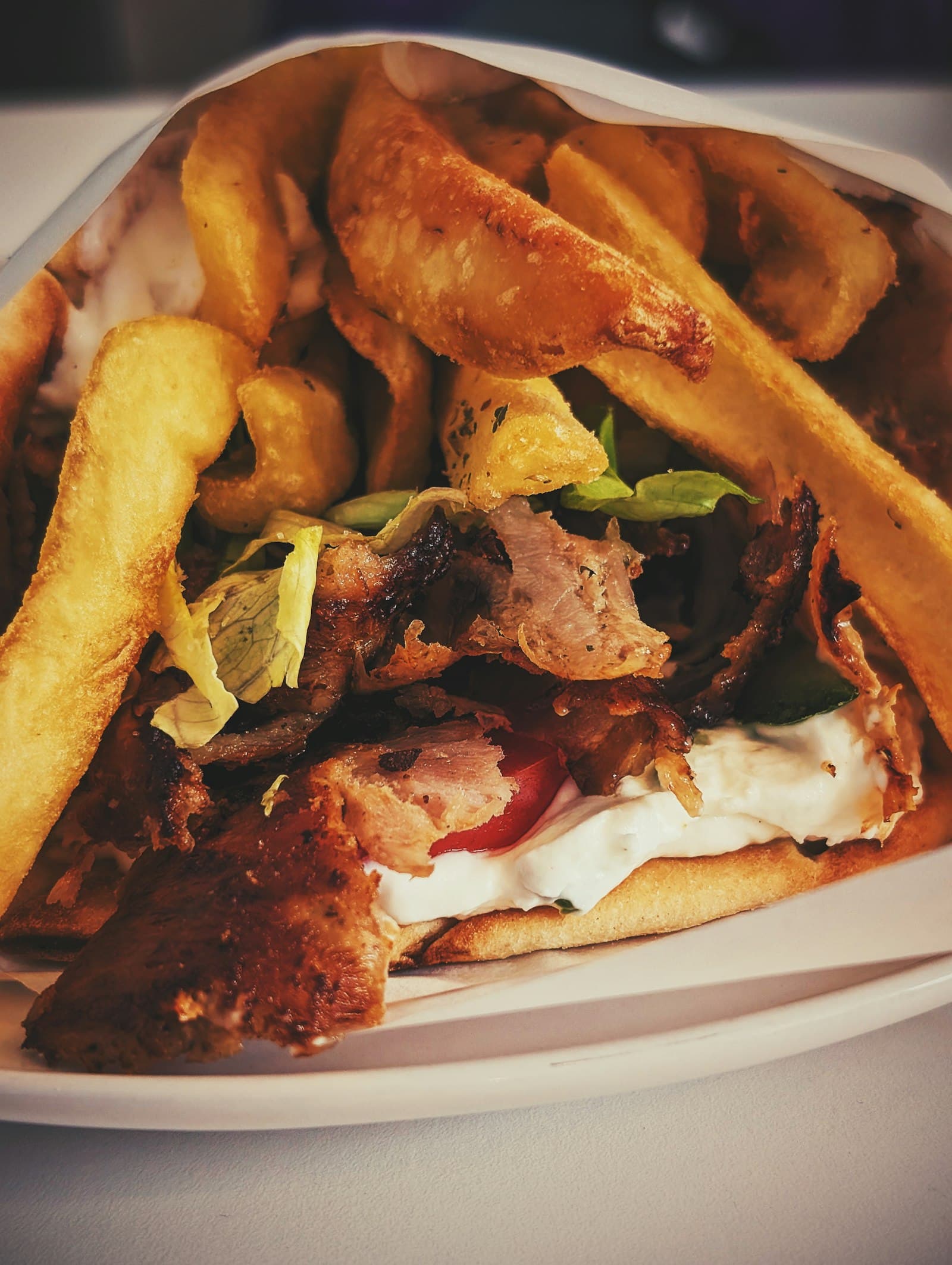
In Greece, gyros usually means pork, shaved from a vertical rotisserie and stuffed into a soft pita with tzatziki, tomato, onion and often a few fries. You can't fit a rotisserie in a home kitchen, so we slice pork shoulder thin, marinate it with lemon, garlic and oregano, and sear it in batches in a very hot pan until the edges catch and crisp. It is the closest thing to street-stand gyros we have made at home.
By Mei Lin Tan
Published
- Prep Time
- 20 mins
- Cook Time
- 20 mins
- Marinate
- 1 hr
- Total Time
- 1 hr 40 mins
- Servings
- 4 servings
How do you make Greek Pork Gyros?
For homemade pork gyros, slice 700 g pork shoulder 5 mm thick and marinate it for at least 1 hour in olive oil, lemon juice, garlic, oregano, paprika, cumin and thyme. Sear in batches in a very hot skillet for 2-3 minutes per side until crisp at the edges and 71°C (160°F) inside, then wrap in warm pita with tzatziki, tomato and red onion.
- Total time
- 1 hr 40 mins
- Calories
- 740 per serving
- Protein
- 44 g
- Yield
- 4 servings
- Difficulty
- Easy
- Method
- Pan-frying
Ingredients
Pork
Tzatziki
To serve
Equipment
Large cast-iron or heavy skillet · Box grater · Clean kitchen towel · Mixing bowls · Instant-read thermometer · Parchment paper (for wrapping)
Quick Directions
Marinate the pork
Slice the pork thinly and marinate for at least 1 hour.
Make the tzatziki
Mix squeezed grated cucumber with yogurt, garlic, oil, vinegar and dill.
Sear the pork
Sear the pork in 3 batches until crisp and 71°C (160°F).
Warm the pitas
Warm the pitas in the skillet until soft and lightly toasted.
Assemble the gyros
Fill each pita with tzatziki, pork, tomato, onion and parsley, then wrap.
Step-by-Step Instructions
Follow these detailed steps to make the perfect greek pork gyros.
Marinate the pork
If the pork is hard to slice, freeze it for 20 minutes first. Cut it into thin slices about 5 mm thick, then into strips about 5 cm long. In a bowl, mix the 2 tbsp olive oil, lemon juice, garlic, oregano, paprika, cumin, thyme, salt and pepper. Add the pork, toss to coat, cover and refrigerate for at least 1 hour or up to 24 hours.
Make the tzatziki
Coarsely grate the cucumber, wrap it in a clean towel and squeeze out as much liquid as you can. Stir it into the yogurt with the grated garlic, olive oil, vinegar, dill and salt. Chill until needed; it tastes better after 30 minutes.
Sear the pork
Heat a large cast-iron skillet over high heat until very hot and add 1 tsp oil. Add a third of the pork in a single layer and cook without moving for 2-3 minutes, until well browned, then flip and cook for 2 minutes more until the edges are crisp and the thickest piece reads 71°C (160°F). Move to a plate and repeat with the rest, wiping out any burnt bits between batches.
Warm the pitas
Turn the heat to medium. Warm each pita in the skillet for 30-60 seconds per side until soft, puffed and lightly toasted, picking up some of the pork juices.
Assemble the gyros
Spread a generous spoonful of tzatziki down the middle of each pita. Top with the pork, tomato, red onion, a few fries if using, and parsley, then sprinkle with a pinch of paprika. Fold the pita around the filling and wrap the bottom half in parchment so it is easy to hold.
Recipe Tips
- Pork shoulder stays juicy and crisps well because of its marbling. Boneless pork loin chops work too, but cook them a little less so they do not dry out.
- Do not crowd the pan. If the pork releases liquid and steams, it turns grey instead of crisp, so cook it in batches over high heat.
- Squeeze the grated cucumber hard. Wet cucumber makes thin, runny tzatziki.
- Look for soft, thick, pocketless pita labelled Greek-style or souvlaki pita. Thin pocket pitas tear when you fold them.
Variations
- Swap the pork for 700 g sliced boneless chicken thighs and cook until they reach 74°C (165°F).
- Oven method: spread the marinated pork on a foil-lined sheet pan and broil on the top rack for 8-10 minutes, turning once, until browned and 71°C (160°F).
- Make a gyros bowl with rice or lemon potatoes, a Greek salad and a spoonful of tzatziki instead of the pita.
Nutrition (per serving)
| Calories | 740 |
|---|---|
| Protein | 44 g |
| Carbs | 51 g |
| Fat | 39 g |
| Saturated fat | 11 g |
| Fibre | 3 g |
| Sugar | 6 g |
| Sodium | 1250 mg |
Estimated from the listed ingredients; values vary by brand.
Related Recipes
Storing & Reheating
- Fridge
- Keep the cooked pork and the tzatziki in separate airtight containers in the fridge for up to 3 days. Store the pitas wrapped at room temperature.
- Freezer
- Freeze the cooked pork for up to 2 months and thaw overnight in the fridge. Tzatziki does not freeze well.
- Reheat
- Reheat the pork in a hot skillet for 2-3 minutes, tossing, until steaming hot, 74°C (165°F), so the edges crisp again.
Greek Pork Gyros FAQs
What meat is used in Greek gyros?
In Greece, gyros is most often made with pork, with chicken as the second favourite. The minced lamb and beef cone common in some other countries is a later variation.
What is the difference between gyros and souvlaki?
Gyros is meat cooked on a vertical rotisserie and shaved off in thin slices. Souvlaki is cubes of marinated meat threaded onto skewers and grilled. Both are served in pita with tzatziki.
Can I make gyros without a rotisserie?
Yes. Slicing the meat thinly before marinating and searing it in a very hot pan gives the browned, crisp-edged slices you get from a rotisserie. Broiling on a sheet pan also works.
How far ahead can I make tzatziki?
Tzatziki keeps for up to 3 days in the fridge and tastes better after a few hours as the garlic mellows into the yogurt. Stir it before serving, as a little liquid may separate.
Disclaimer
- Nutrition information is an estimate based on the listed ingredients. It changes with the brands, portion sizes and swaps you use.
- Read ingredient labels for allergens and for diet claims such as gluten-free or vegan. Products and their ingredients can change.
- Cooking times are a guide, since ovens, air fryers and slow cookers all run differently. Use a food thermometer and cook meat, poultry and fish to the safe internal temperatures in government food safety guidance.
- This recipe is general information, not medical or nutrition advice. If you have an allergy, a health condition or a special diet, check with a qualified health professional.